
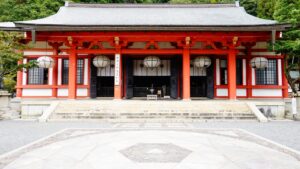
Kuramadera Temple's Power Contributed Minamoto no Yoshitsune to Winning the Genpei War
Kuramadera Temple, nestled deep in Mt. Kurama in the northern part of Kyoto, is renowned for its vortexes and the breathtaking natural beauty of trees that have grown over the years. Upon passing through the Niomon Gate, a meandering path guides visitors to the main hall. In the Heian period (794-1185), the esteemed female writer […]
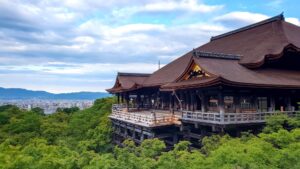
Kiyomizu-dera: Shogun Tamuramaro Conquers the North with Kannon's Blessings
Discover how Sakanoue no Tamuramaro conquered the north with the help of Kannon at Kiyomizu-dera. Explore his battles against the Emishi, his faith, and his legacy in Noh.
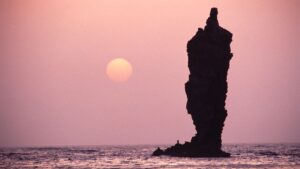
The First Emperor Exiled by Samurai: Emperor Go-Toba and the Political Drama of Japan’s Oki Islands
Discover the dramatic story of Emperor Go-Toba, the first emperor exiled by samurai after the Jōkyū War of 1221. Explore how the remote Oki Islands became the stage for one of medieval Japan’s greatest political turning points.

Yoshimizu & Yoshino Jingu Shrines: Tracing Emperor Go-Daigo and the Story of the Southern Court
Discover Yoshimizu Shrine and Yoshino Jingu in Nara where the story of Emperor Go-Daigo, the Kenmu Restoration, and the Southern Court unfolded amid Japan’s most famous cherry blossom landscape.

Sakuradamon Gate of Edo Castle ruins with beautiful cherry blossoms: Ii Naosuke lost his life
The stunning sight of cherry blossoms in full bloom reflecting on the water of Chidorigafuchi moat of the former Edo Castle, now the Imperial Palace, is breathtaking. Its beauty leads to the Sakuradamon gate, where a startling event occurred under a cold sky with heavy snowfall in 1860 for the Tokugawa shogunate. Ii Naosuke (1815-1860; […]
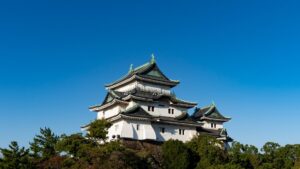
Wakayama Castle: A Great Lord, Yorinobu, lay the Foundation of Kishu's Prosperity
In 1619, three years after Tokugawa Ieyasu's passing, his 10th son, Tokugawa Yorinobu (1602-1671, 徳川頼宣), received 555,000 koku, equivalent to the rice crop yield (*) and established the Kishu domain (present-day Wakayama and southern Mie Prefectures). Wakayama Castle, the Kishu Tokugawa Family's residence, was extended and constructed at the mouth of the Kino River, which […]
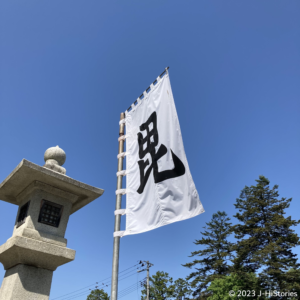
The God of War, Kenshin, and the Muromachi shogunate Revival
Uesugi Kenshin (1530-1578, 上杉謙信) was a fervent believer in the god of war, Bishamonten (毘沙門天), using one of the letters of '毘' as an emblem on his own flag, and fighting under the banner of 'Bi'. During his lifetime, he lost only twice out of 71 battles, making him a true military god. During the […]
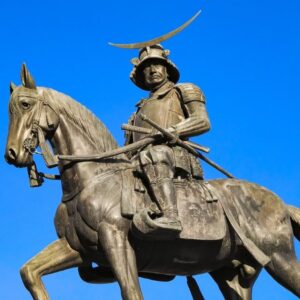
One-Eyed Dragon, Date Masamune: The Life, Legacy, and Beliefs of Japan's Great Samurai
Discover the story of Date Masamune, the legendary One-Eyed Dragon of Japan. Explore his beliefs, legacy, and the magnificent Zuihoden mausoleum that reflects the spirit of this great samurai.
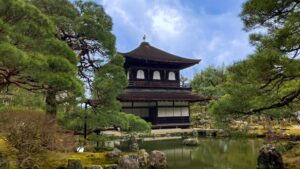
Ginkaku-ji (Silver Pavilion): The Moon-Viewing Temple That Shaped Wabi-Sabi
Ginkaku-ji Temple (Silver Pavilion), a UNESCO World Heritage Site and a National Treasure, stands quietly at the foot of Mt. Higashiyama, far from the bustling heart of Kyoto. Ashikaga Yoshimasa (1436-1490, 足利義政), the 8th shogun of the Muromachi shogunate (1336-1573), ordered its construction during the latter years of his reign. Within the tranquil confines of […]
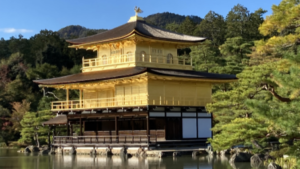
Kinkaku-ji (Golden Pavilion): A Symbol of Buddhist, Samurai, and Courtly Power
Kinkaku-ji Temple (the Golden Pavilion), a UNESCO World Heritage Site, was built by Ashikaga Yoshimitsu, the third shogun of the Muromachi shogunate (1336-1573), after he retired from the political power of shogun and became a Buddhist priest. Part of Rokuon-ji Temple, the Golden Pavilion is renowned for its unique three-story structure, in which each floor […]