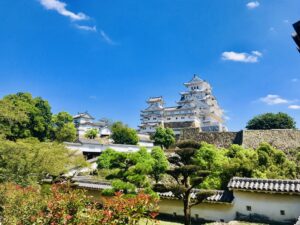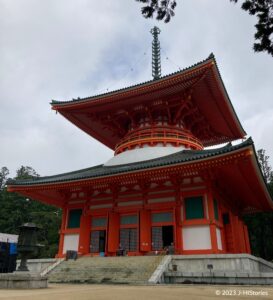
The Golden Tea Room and Wabi World Tai-an
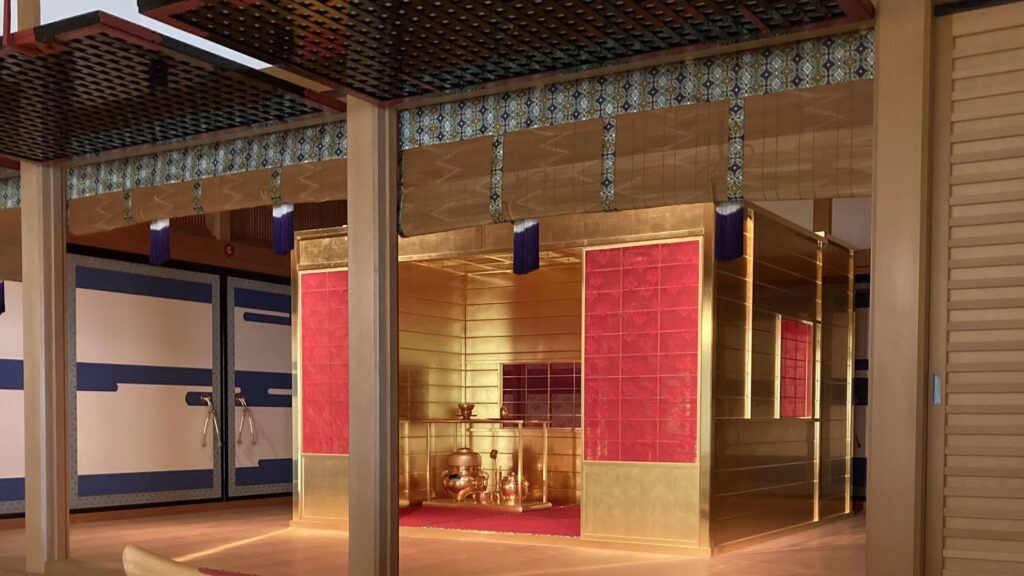
The magnificent Golden Tea Room, with its walls, pillars, ceiling, and tea utensils covered in gold leaf, glowed with a solemn crimson hue reflected from the scarlet wool cloth draped across the shoji screens. The dazzling space symbolized the extraordinary authority of Toyotomi Hideyoshi. In striking contrast stands Tai-an in Myokian Temple, a National Treasure and the oldest surviving tea room in Japan, alongside Jo-an and Mittan. Measuring only about two tatami mats, the small, dimly lit space embodies the quiet aesthetic of the wabi-sabi cherished by Sen no Rikyū (Rikyu). Soft filtering through a lattice window creates an atmosphere of profound simplicity, where beauty emerges from what has been reduced to the bare essentials.
For nearly a decade, Toyotomi Hideyoshi and Sen no Rikyu worked closely together. Why, then, did Hideyoshi suddenly order Rikyu to commit seppuku? Several theories have been proposed. One explanation is that both men stood at the pinnacle of their respective worlds—Hideyoshi as the ruler of Japan, and Rikyu as the unrivaled authority of chanoyu. In time, their powerful positions and visions inevitably came into conflict.

『都林泉名勝図会』京都大学附属図書館所蔵
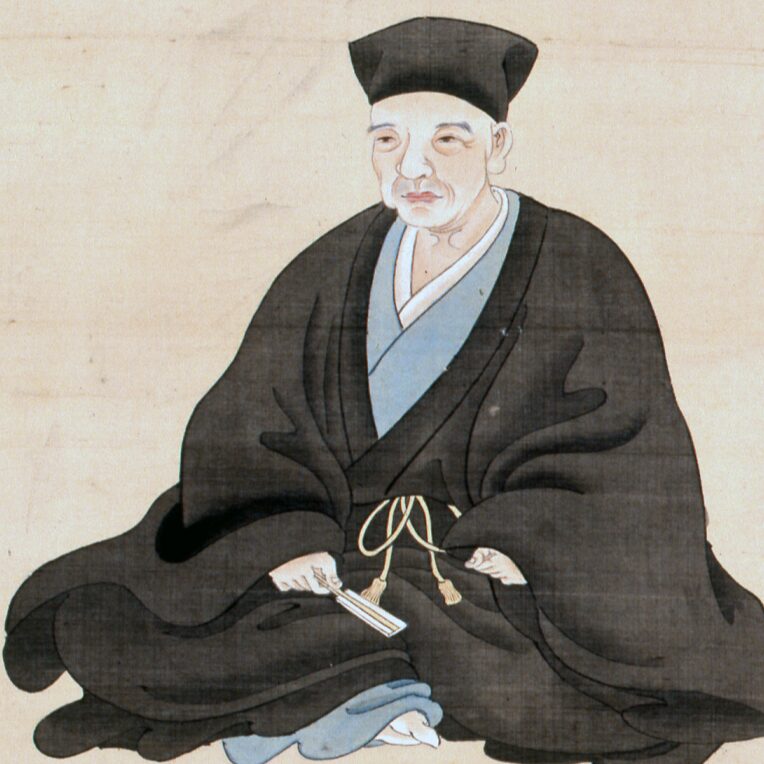
Sen no Rikyu, the Perfectionist of Wabi-cha (tea ceremony)
(@ Sakai City Museum)
Perhaps you have experienced or heard of the traditional tea ceremony. Chanoyu (Way of Tea) was perfected by Sen no Rikyu (1522-1591, 千利休) during the 16th century. Rikyu’s unique style of chanoyu, known as Wabi-cha, aimed to simplify and remove unnecessary artificial elements to focus on the inherent spirituality of nature. To achieve this, Rikyu designed a very small and rustic tea house with only two tatami mats, featuring a crawl-in entrance to shift the guests’ mindset from their daily life to the tea world. Tea utensils were often crafted from natural Japanese materials such as bamboo, and the tea bowls were solid black, hand-molded by a potter named Cyojiro. This was a departure from the colorful and decorative Chinese tea bowls that were popular at that time.
The Honeymoon between Hideyoshi and Rikyu
In the 15th century, tea gatherings were held in large reception rooms where hosts displayed flamboyant fine arts and crafts imported from the Ming dynasty to their guests. Tenkyokaku, a now-lost building connected to Kinkaku-ji (the Golden Pavilion), is a well-known example of such a venue. It was built by the 3rd shogun of the Muromachi shogunate, Ashikaga Yoshimitsu (1358-1408,足利義満).
During the Warring States period (1467-1590), Oda Nobunaga (1534-1582, 織田信長) recognized the political value of the tea ceremony and relied on influential merchants from Sakai, including tea master Imai Sōkyū, to support his rule through trade and financial networks. He held tea ceremonies several times, mainly at Myokakuji Temple.
(@都城島津邸)
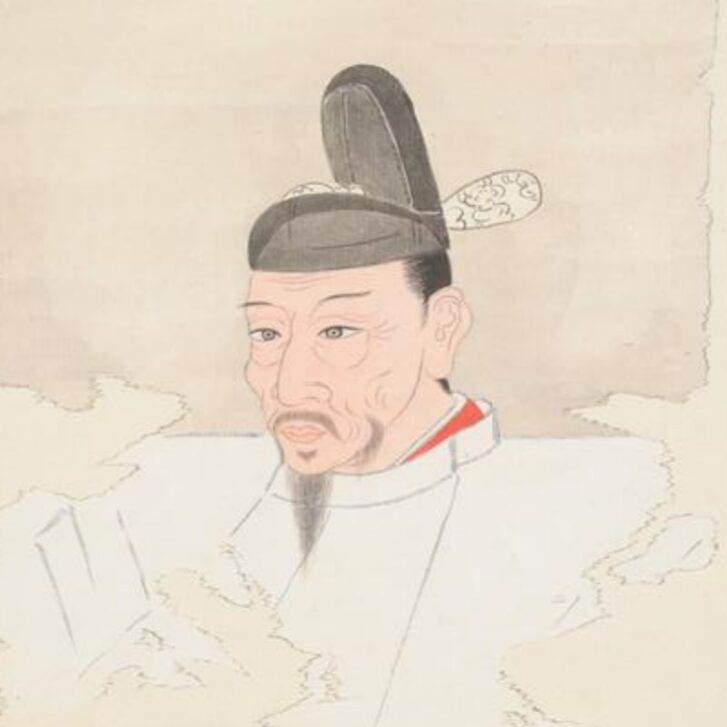
After Nobunaga’s sudden death in the Honnoji incident of 1582, his successor Toyotomi Hideyoshi (1537-1598, 豊臣秀吉) further elevated the political role of chanoyu. At the age of 60, Rikyu became Hideyoshi’s tea master and served as his right-hand man politically as well. Hideyoshi often made political decisions in a small tea room served by Rikyu, while listening to Rikyu’s opinion. Rikyu expertly managed several tea ceremonies ordered by Hideyoshi, such as the Imperial Palace tea ceremony using the portable Golden Tea Room in 1586, and the Kitano tea ceremony at Kitano Tenmangu Shrine in 1587.
Conflicts between Hideyoshi and Rikyu
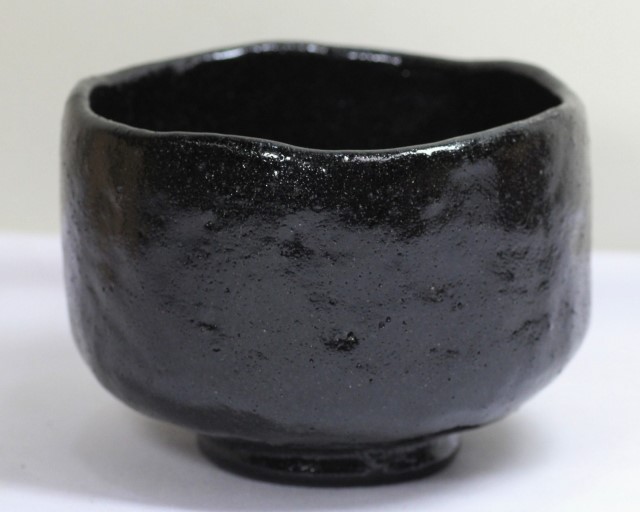
However, the situation between Hideyoshi and Rikyu changed after Hideyoshi’s victory in the final battle at the Odawara War in 1590, which led to the unification of the country against the Hojo clan. The state of their relationship worsened. Hideyoshi preferred grand and flamboyant styles, while Rikyu pursued his aesthetic of simplicity. Three symbolic episodes reflected this conflict. First, when Rikyu invited Hideyoshi to his tea ceremony, he cut all the bellflowers except for one. Hideyoshi saw just one morning glory in a small tea house. It is said that Hideyoshi began to feel some bitterness toward Rikyu. Secondly, at the New Year's tea ceremony in 1591, Rikyu used a black Raku bowl made by Chojiro because he believed that the green color of the tea in the black bowl was the perfect combination of wabi style. However, Hideyoshi disliked it. Lastly, at another tea ceremony, Hideyoshi put a wild chrysanthemum between a tea bowl and the Katatsuki (tea canister) to show off his self-confidence in his understanding of the wabi concept. Rikyu subtly removed it and proceeded with the tea ceremony as though nothing had happened. This impressed Rikyu’s greatness in the tea world, but it agitated Hideyoshi and probably triggered a deep-seated resentment of Rikyu.
Sticking to Their Ways of Life Brought On the Tragedy
In February of 1591, Hideyoshi ordered Rikyu to commit hara-kiri, though he intended to spare Rikyu if he bowed his head to Hideyoshi. However, Rikyu chose to commit ritual suicide at age 70. There are several theories proposed as to the reason for his hara-kiri. One reason is that Rikyu insisted on his wabi aesthetic, which he had developed throughout his life, and was unable to yield to Hideyoshi’s power. As a merchant from Sakai, Rikyu had a realistic nature to compromise and calculate. When he started serving Hideyoshi, he understood Hideyoshi’s idiosyncrasies and managed to balance his wabi tea way with Hideyoshi’s preferred way. However, after Hideyoshi unified the nation, Rikyu’s style was the only thing remaining unconquered by Hideyoshi. Another reason is that Hideyoshi no longer needed the tea ceremony or Rikyu after he was appointed Dajo-daijin (Grand Minister of State), which gave him the highest authority in Japan following the emperor. Until then, the tea ceremony was a tool to showcase his power and authority. Therefore, Hideyoshi likely wanted to conquer Rikyu and so ordered his hara-kiri. (by Tanaka Sendo, president of Dainihon Chado Gakkai, one of the schools of the tea ceremony). However, tea masters such as Furuta Oribe, Kobori Enshu, and Uraku, who looked up to Rikyu as their teacher, continued to develop the chanoyu with their talents.
Two Tea Rooms, A Subtle and Profound Atmosphere
Please immerse yourself in the awe-inspiring ambiance of the Golden Tea House, envisioning its walls radiating an austere yet elegant scarlet hue, while soft natural light filters through the scarlet silk gauze of the sliding screen when closed, creating an atmosphere that is both subtle and profound. In contrast, the Tai-an Tea Room exudes an ineffably tranquil aura, with its delicate light seeping through the Shoji paper screen of the Renjiko-window. This tiny space only houses tea utensils, yet it conveys a boundless spiritual expanse. Ultimately, both rooms epitomize Rikyu's magic, drawing you into his world with ease.
Toyotomi Hideyoshi and Sen no Rikyu Timeline
| Toyotomi Hideyoshi | Sen Rikyu | |||
| 1336 | Ashikaga Takauji estabilished Muromachi shogunate | - | Muromachi Period | |
| 1467 | Onin War started (- 1477) | - | ||
| 1522 | Sen Rikyu was born in Sakai | Age=1 | ||
| 1537 | Hideyoshi was born in Nagoya | Age=1 | ||
| 1573 | Muromachi shogunate ended by the 15th shogun, Yoshiaki was ousted by Nobunaga | 36 | Azuchi Momoyama Period | |
| 1574 | Rikyu joined Tea Party held by Oda Nobunaga | 52 | ||
| 1575 | Rikyu procured guns for Nobunaga | 53 | ||
| 1582 | Nobunaga was killed at Honnoji by Akechi Mitsuhide | 45 | ||
| 1582 | Hideyoshi defeated Akechi Mitsuhide | 45 | ||
| 1582 | Rikyu became a tea master of Hideyoshi | 60 | ||
| 1583 | Rikyu built Tai-an | 61 | ||
| 1584 | Rikyu built two tea rooms in Osaka Castle | 62 | ||
| 1586 | Hideyoshi held the tea ceremony for Emperor Ogimachi, bringing the Golden Tea Room | 49 | 64 | |
| 1587 | Hideyoshi built the huge Osaka castle | |||
| 1587 | Hideyoshi held Kitanotenmangu shrine tea ceremony | 50 | ||
| 1590 | Hideyoshi spearhead army to attack Hojo clan | 53 | ||
| 1590 | Hideyoshi unified the nation | 53 | ||
| 1591 | Rikyu Hara-Kiri | 54 | 70 | |
| 1598 | Hideyoshi passed away | 61 | ||
| 1600 | Tokugawa Ieyasu defeated Ishida Mitsunari, Hideyoshi's right arm at the battle of Sekigahara | |||
| 1603 | Ieyasu estabished Tokugawa shogunate at Edo | Edo | ||
| 1615 | Toyotomi's Osaka Castle burnt down to the ground at the Summer Siege of Osaka | - |
Recommendations to visit
Golden Tea Room - MOA Museum
- Access: 40 minutes from Tokyo Station to Atami Station on JR Tokaido Shinkansen. 7 minutes by bus bound for MOA Museum of Art (final stop) at Bus Stop #8.
Golden Tea Room - Nagoya Castle Museum
- Access: 8-minute walk from JR Karatsu Station to Oteguchi Bus Center. Get a bus on Nomoto-Nagoya Line to Nagoya Castle Museum Bus stop for 35-min.
Tai-an Tea House in Myokian Temple
- Access: 15 min from Kyoto Station to Yamazaki Station on JR Tokaido Main Line. A one-minute walk to Myokian Temple.
- Need the reservation in advance by a return postcard.
Raku Museum
Access: 1 hour from Kyoto Station. Take bus #9 bound for "Nishigamo Shako (西賀茂車庫)" or #50 bound for "Kitano Tenmangu (北野天満宮), or Ritsumei kan University (立命館大学)” at A2 or D2. Got off at "Nakadachi-uri (堀川中立売下車)" bus stop, then a 3-minute walk.