
Oda Urakusai and Jo-an: Moving Hearts and History Through the Power of Words and Tea
日本語版はこちら → 織田有楽斎の物語
Urakusai (Oda Nagamasu), the younger brother of the powerful warlord Oda Nobunaga, was not only a samurai who survived the turbulent Warring States period but also a refined tea master who left a lasting cultural legacy. His masterpiece, the Jo-an Tea Room (如庵), now designated as a National Treasure, is considered one of the finest surviving tea houses in Japan. Alongside Tai-an at Myokian in Kyoto, built by Sen no Rikyu, and Mittan at Daitokuji Temple by Kobori Enshu, it represents the pinnacle of tea room architecture.
In the 16th century, the tea ceremony was deeply intertwined with politics. Yet Urakusai pursued a different ideal — to entertain and connect with his guests. He once said, “The main principle of the tea ceremony is entertaining the guests.” How did a man born into one of Japan’s most powerful warrior families arrive at such a philosophy? This article explores the life, mindset, and cultural significance of Urakusai through the story of Jo-an.
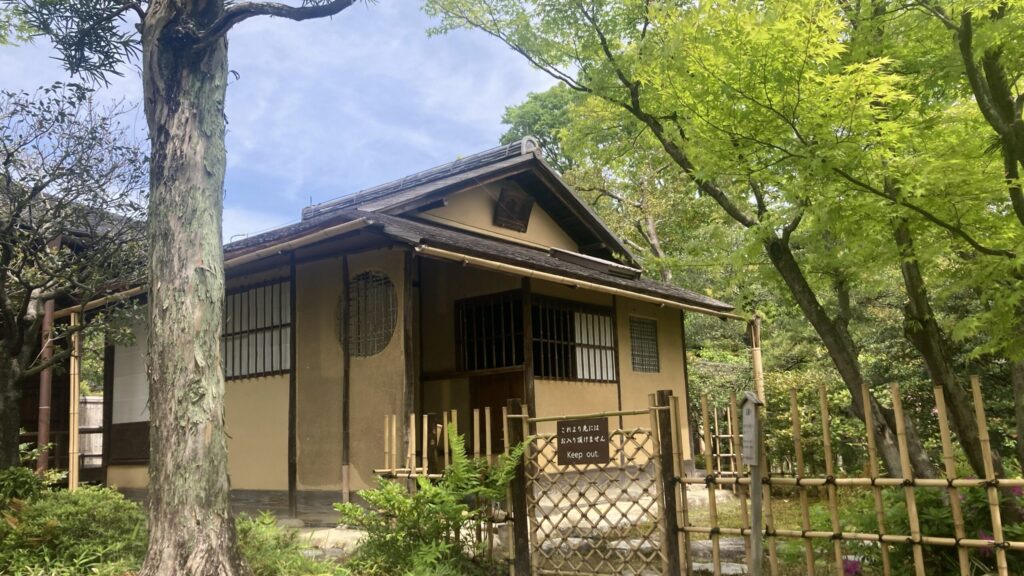
Not Spacious, but Not Cramped Either
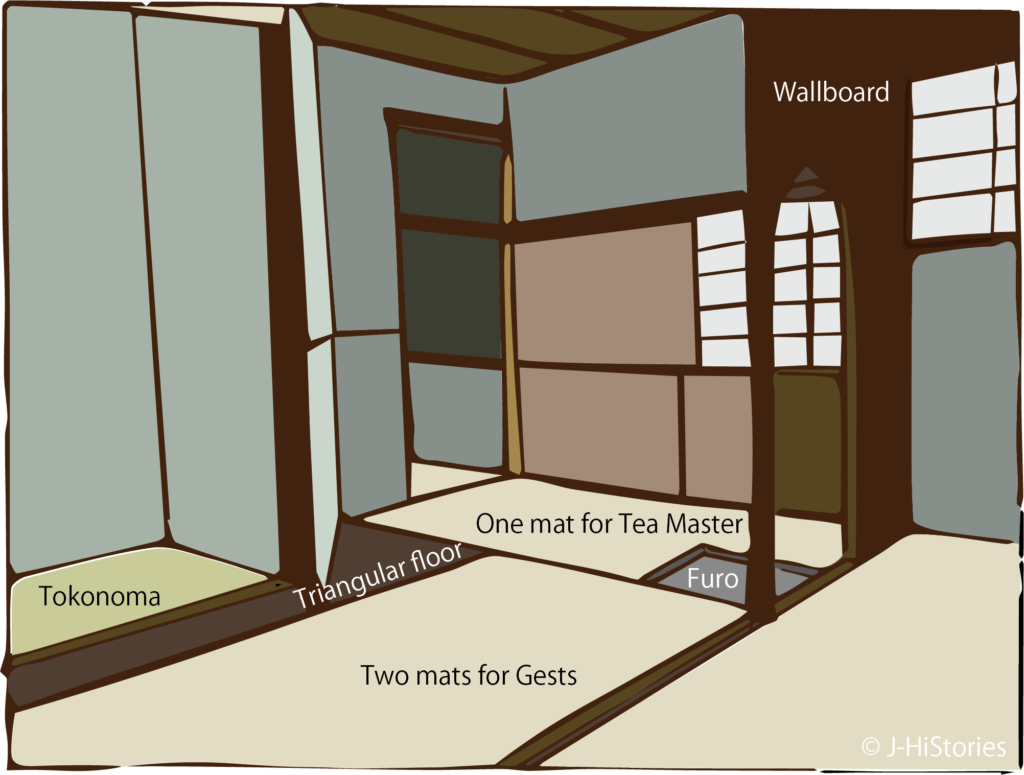
The Jo-an consists of two Tatami mats for guests, nearly one Tatami mat for a tea master, and Tokonoma (alcove). Notable features include (1) a triangular floor that connects the master's door and the guest space, and (2) the wallboard next to the furo (furnace) is hollowed out and supported by the cedar pillar at the corner of the fireplace. These features create an aura of the Samurai's cool and light atmosphere. The tea ceremony that Oda Nagamasu (1548-1622, 織田長益), later known as Urakusai, aimed for is well expressed in three oral traditions handed down in the Oda school:
- Do not make guests feel uncomfortable
- Do not embarrass guests
- Give guests a sense of satisfaction
Let’s explore his life.
His Brother, Nobunaga, Died at the Honnoji Incident
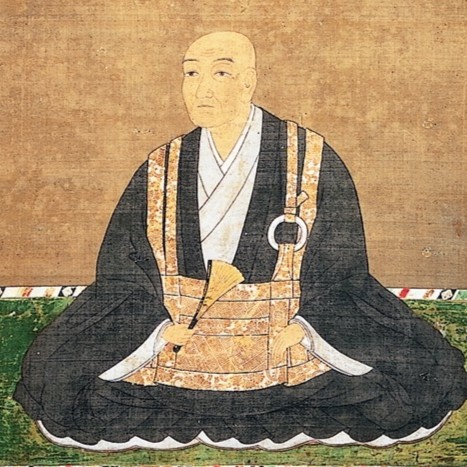
@ Shoden-eigenin Temple
In 1582, Toyotomi Hideyoshi (1537-1598, 豊臣秀吉), the retainer of Nagamasu's elder brother, Oda Nobunaga (1534-1582, 織田信長), was attacking the Mori clan's Bicchu-Takamatsu Castle in Okayama Prefecture in the run-up to the unification of the nation. Nagamasu and Nobutada, Nobunaga's eldest son, were about to leave Kyoto to reinforce Hideyoshi. There, startling news arrived:
“Mitsuhide had rebelled (killed his lord, Nobunaga)”.
They rushed to Honnoji Temple to rescue Nobunaga, but turned back and holed up in the new Nijo Palace once they heard about Nobunaga's suicide. Unable to do anything about it, Nobutada committed suicide. On the other hand, Nagamasu escaped to Gifu Castle. Nagamasu was probably left the future of the Oda family by Nobutada.
Nagamasu Served Nobunaga, Hideyoshi, and Ieyasu
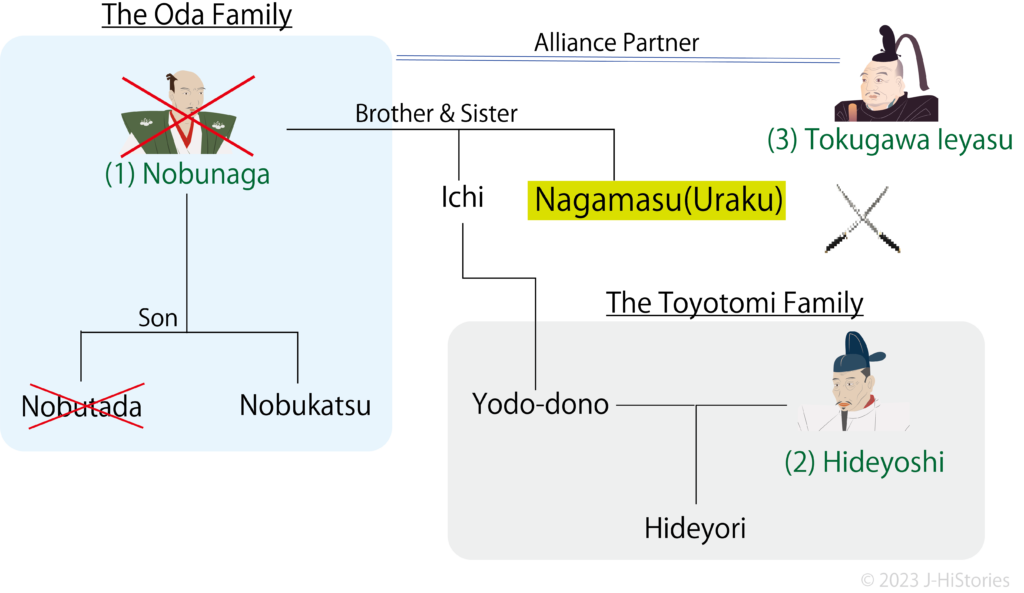
After Nobunaga’s death, Nagamasu served Nobukatsu (Nobunaga’s second son). In the meantime, the struggle for supremacy over Nobunaga began. The Battle of Komaki and Nagakute broke out between Hideyoshi and Nobunaga’s allied partner, Tokugawa Ieyasu (1543-1616, 徳川家康), on whom Nobukatsu relied. Nagamasu demonstrated his negotiating skills and concluded a peace agreement between them. Later, after Hideyoshi's death, he served Tokugawa Ieyasu. Raised by his charismatic brother, Nobunaga, Nagamasu served Hideyoshi and Ieyasu without flattery. This is his greatness. As the younger brother of Nobunaga, who sought to unify the nation, and as the legitimate son of Nobuhide, the father who reunited the divided Oda family, he may have had a mindset that surpassed that of many samurai.
Nagamasu Worked for Peace between Toyotomi and Tokugawa
As the years passed, Hideyoshi passed away in 1598, and Ieyasu emerged victorious in the Battle of Sekigahara against Hideyoshi's loyal retainer, Ishida Mitsunari (1560-1600, 石田三成), in 1600. Nagamasu sided with Ieyasu. After that, Nagamasu diligently served at Osaka Castle, where Hideyoshi's heir, Hideyori (1593-1615, 豊臣秀頼), and his mother, Yodo-dono, resided, aiming to establish a peaceful agreement between the Toyotomi and Tokugawa factions. Despite his efforts, resistance groups persisted within Osaka Castle, leading Nagamasu to abandon his attempts at persuasion and depart from the castle in 1615. In short, Nagamasu's attempt to reconcile Tokugawa and Toyotomi was thwarted. During this time, Nagamasu constructed the Jo-an in a sub-temple of Kenninji Temple, seeking solace and fulfillment in the world of tea for the rest of his life.
Birth of the Tea Master Urakusai
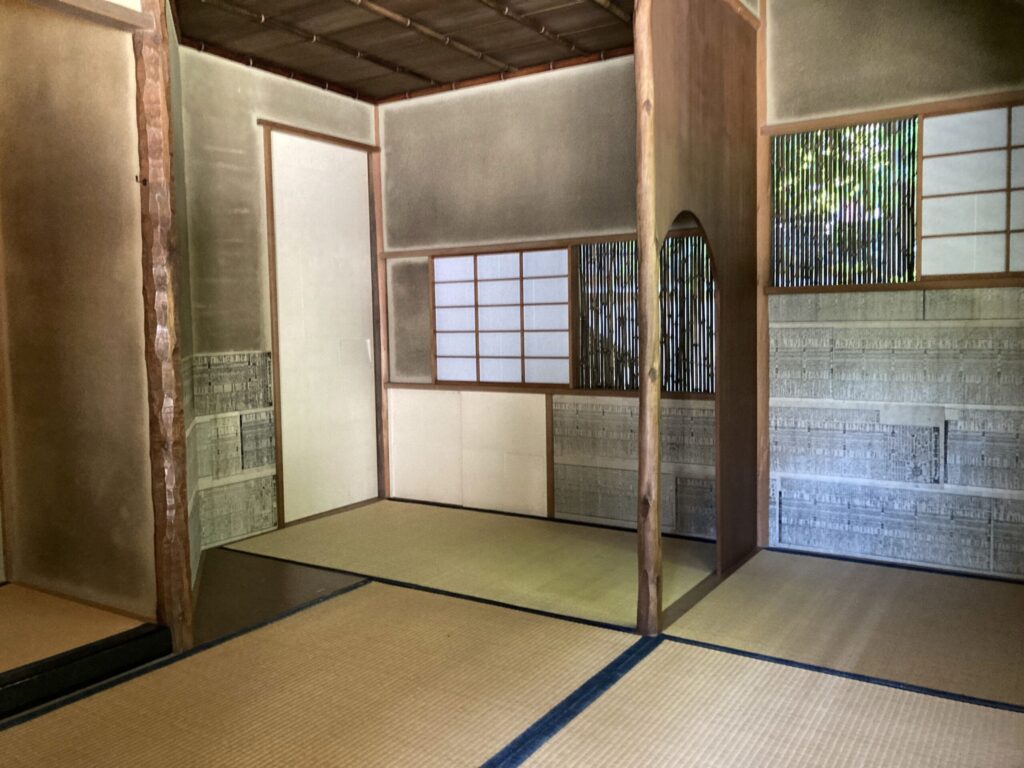
During Nagamasu's service to Hideyoshi, another tea master, Sen no Rikyu (1522-1591, 千利休), Hideyoshi's tea master and his right-hand man, provided political advice. Rikyu built the Tai-an tea room with only 2 tatami mats by trimming all excesses and leading the tea ceremony into a philosophical world. Sitting in this small room, the guests might have felt a kind of tension, although Rikyu carefully designed the room to create a sense of spaciousness. On the other hand, Urakusai, a tea master who surpassed Rikyu's seven adepts, believed in the principle of entertaining guests at the tea ceremony. This may have been the ground Urakusai reached after living through the late Warring States period, when battles were fought across the country, mobilizing military, intelligence, and economic forces.
Urakusai-style Tea, the Pioneer of the Samurai Tea Ceremony
With the beginning of the peaceful Edo period (1603-1868), the samurai tea ceremony became popular, emphasizing a samurai-like approach. Urakusai tea may have been a forerunner of this style. The distinctive feature of this type of tea ceremony is the constant demand for training in both mindset and technique. The fukusa (sliding screen) is usually worn on the left side of the body, but it is also worn on the right side (as the left side is reserved for holding a dagger). The proper form of bowing in samurai etiquette is to place a fan in front of the knees and bow with both hands clasped at the sides of the knees. Unlike the Iemoto system of the Senke family school, which is inherited through the family lineage, Samurai Tea was promoted by the samurai themselves, who used tea as a means of training and refining their samurai qualities. The spirit of the samurai is play and fun. The spirit of the samurai, who could die at any time, seems to exist in the unconventional and spontaneous tea ceremony. By rejecting the rules and formalities of life, Urakusai expressed the essential freedom of human nature through tea.
Experience the Philosophy of Urakusai
Urakusai, born as the younger brother of Oda Nobunaga, lived through one of the most transformative eras in Japanese history — from the chaos of the Warring States period to the establishment of lasting peace. As a member of the Oda family’s main line, he stood between rival powers and connected people through the power of harmony.
The power to move people lies in words — and in who delivers them. Urakusai’s words opened hearts and built trust among those around him. His tea gatherings were not merely artistic occasions, but spaces where people came together and relationships, sometimes even the course of history, were shaped.
This book explores the lesser-known life of Urakusai: not only as the great tea master who created the National Treasure Jo-an Tea Room, but as a man who used the power of harmony to connect people and support the transition from an age of war to an era of peace. His wisdom continues to offer valuable lessons for today’s leaders seeking to build trust and bring people together. Harmony quietly contributes to the foundation of a peaceful world.
For readers interested in exploring his life and philosophy in greater depth:
ODA URAKUSAI: The Samurai Tea Master Who Chose Peace: Brother of Nobunaga and Member of the Oda Main Line (English Edition) → View on Amazon
『有楽斎 ― 信長の実弟にして織田家嫡流、天下泰平を導いた真の立役者 ― 』 (Japanese edition)
→ View on Amazon(Amazonで見る)
Oda Urakusaisai Timeline
| Nagamasu (Urakusai) | Nobunaga | Hideyoshi | Ieyasu | Period | ||
| 1534 | Nobunaga was born in Owari Province | - | 1 | - | Muromachi |
|
| 1537 | Hideyoshi was born in Nagoya | - | 1 | - | ||
| 1542 | Ieyasu was born in Okazaki Province | - | 1 | |||
| 1547 | Oda Nagamasu was born | Age =1 | ||||
| 1554 | Hideyoshi started to work under Nobunaga | - | Age=17 | |||
| 1560 | Nobunaga defeated Imagawa Yoshimoto at the battle of Okehazama | - | 27 | 23 | 19 | |
| 1561 | Ieyasu made an alliance with Nobunaga | - | 20 | |||
| 1568 | Nobunaga went up Kyoto bringing Ashikaga Yoshiaki | - | 35 | |||
| 1570 | Ishiyama Hongwanji raised the army against Nobunaga | - | 37 | 33 | ||
| 1570 | Nobunaga defeated the Asai and Asakura clans | - | 40 | 36 | 29 | |
| 1571 | Nobunaga defeated Enryakuji Temple's monk solduers | - | 38 | |||
| 1573 | Muromachi shogunate ended by the 15th shogun, Yoshiaki was ousted by Nobunaga | - | 31 | Azuchi Momoyama | ||
| 1575 | Oda-Tokugawa allied completely defeated the Takeda clan at the battle of Nagashino | - | 42 | 38 | 34 | |
| 1577 | Hideyoshi started to conquer the Estern Japan by Nobunaga's order | - | 45 | |||
| 1580 | Nobunaga made peace with Ishiyama Hongwanji Temple | - | 47 | |||
| 1582 | Nobunaga was killed at Honnoji by Akechi Mitsuhide | 36 | 49 | 45 | 41 | |
| 1582 | Hideyoshi defeated Akechi Mitsuhide | - | - | 45 | ||
| 1582 | Rikyu became a tea master of Hideyoshi | - | 45 | |||
| 1584 | Komaki-Nagakute battle between Hideyoshi and Ieyasu | 38 | ||||
| 1586 | Hideyoshi built the huge Osaka castle | - | 49 | |||
| 1590 | Hideyoshi unified the nation | - | - | 53 | ||
| 1590 | Nagamasu started to use Urakusai name | 44 | ||||
| 1591 | Rikyu Hara-Kiri | - | 53 | |||
| 1598 | Hideyoshi passed away | - | - | 61 | 57 | |
| 1600 | Nagamasu joined the Tokugawa Army at the battle of Sekigahara and distinguished himself in the war. | 54 | ||||
| 1603 | Ieyasu estabished Tokugawa shogunate at Edo | - | - | 62 | Edo | |
| 1612 | Ieyasu built Nagoyajo Caslte | - | ||||
| 1614 | The Winter Siege of Osaka | 68 | 73 | |||
| 1615 | Toyotomi's Osaka Castle burnt down to the ground at the Summer Siege of Osaka | 69 | - | 74 | ||
| 1616 | Ieyasu passed away at the age of 75 | - | 75 | |||
| 1618 | Nagamasu built Jo-an | 72 | ||||
| 1621 | Nagamasu passed away | 75 |
Recommendations to visit
Jo-an
- Access: 35 minutes from Meitetsu Nagoya Station to Inuyama Yen Station (犬山遊園) on the Meitetsu Inuyama Line. An 8-minute walk from Inuyama Yuen Station.
Shoden-eigenin
- Access: 20 minutes from Kyoto Station. Take bus #206 or #86 at D2. Get off at "Higashiyama-Yasui (東山安井)" stop, then a 10-minute walk.
_s-300x169.jpg)