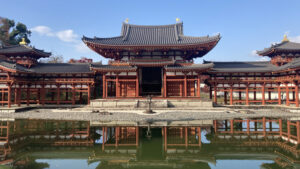
Enryakuji Temple on Mt. Hiei: The 1200-Year Eternal Light of Japanese Buddhism
Enryakuji Temple, a UNESCO World Heritage, was founded in 788 by Saicho, the founder of the Tendai sect, on Mt.Hiei, overlooking Kyoto. At the age of 19, Saicho entered Mt.Hiei, carved an image of Yakushi Nyorai (Medicine Buddha), and lit a votive candle with the vow of “enlightening the world”. The flame, now known as the Eternal Light, has continued to burn for more than 1,200 years. Even when Enryakuji was attacked by powerful warlords, including shoguns and Oda Nobunaga, the light was never allowed to die out. The reason lies in the unwavering devotion of the monks of Enryakuji, who have preserved the Dharma light generation after generation.
Mother of Japanese Buddhism
In 797, Saicho (767-822, 最澄) was assigned to serve the 50th Emperor Kanmu (737-806, 桓武天皇), as naigubu, a monk to serve the emperor. This occurred four years after the transfer of the palace and capital from Nara to Kyoto. Following his death, Saicho was posthumously granted the title of Dengyo Daishi (Great Teacher of Buddhism) by the 56th Emperor Seiwa (850-881, 清和天皇) in 866. Many of Saicho's disciples studied at Enryakuji Temple and went on to become founders of several sects, shaping the later world of Buddhism: Honen, Shinran, Dogen, Yosai, Nichiren, and others. As a result, Enryakuji Temple has earned the nickname "Mother of Japanese Buddhism”.
All Men are Created Equal vs Not Equal
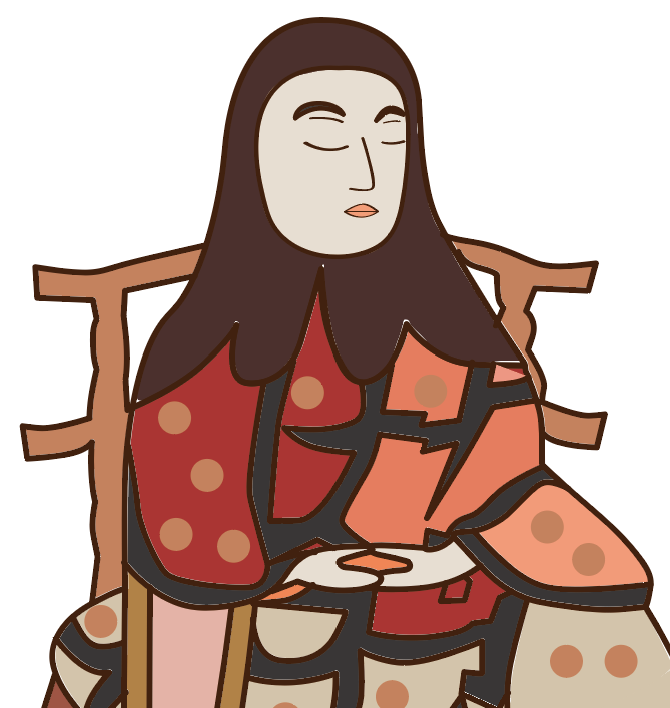
On Saicho’s return to Japan from his study in China in 806, the Imperial Court officially approved the Tendai sect. He dedicated himself to spreading the Tendai sect's doctrine of equality, which held that everyone could become a Buddha and that each person is unique and different, but everyone is equal in having a Buddha nature. According to this doctrine, if people are aware of their Buddha nature and practice Buddhism, everyone can become a Buddha. Saicho's teaching sparked debates with existing sects over whether everyone could become a Buddha or not. This confrontation continued until a year before Saicho’s death. Saicho's lifelong goal was to establish the Kaidan of the Tendai sect to spread the Tendai doctrine independently of national Buddhism. In those days, to be recognized as a Buddhist priest, one had to be officially recognized by the state. This system is known as Kaidan. However, he was unable to achieve it until seven days after his death. The state-supported Todaiji Temple in Nara, which had its Kaidan, did not fully accept Saicho's doctrine, “all men are created equal”, which was different from their teaching, “ability differs from person to person”. To make matters worse, Emperor Kanmu, a strong supporter of the Tendai sect, passed away, leading to a sharp decline in the sect's power. Saicho fiercely argued for his doctrine, but he died a broken-hearted man. Seven days after he died in 822, however, his own Kaidan was allowed to be established by the Imperial Court with the hard work of his pupils. As Saicho's last words were, "Pass on my aspirations to future generations". His teachings have been passed down to the present day in an unbroken line.
Mighty Political Power by Enryakuji
During the 10th and 11th centuries, Enryakuji Temple sought to improve its status and its financial base by strengthening its relationship with the regent family, who held significant power at the time, through the management of private estates. To prevent intervention from provincial governors, Enryakuji repeated strong suits frequently. Over time, the temple's monk soldiers gained more power and began to directly petition the Imperial Court with a firm attitude, often carrying a portable shrine (at that time, Buddhism and Shinto were mixed) into the palace to express their divine power and force compliance with requests related to human affairs and territories. If their demands were not met, they left the portable shrine in front of the palace gate, causing court nobles to fear the deity’s power and bringing government practices to a halt. This act of direct petition with a firm attitude is called Goso. The cloistered Emperor Go-Shirakawa (1127-1192, 後白河上皇) expressed this situation well in his lament, “The water of the Kamogawa river, games of dice, and Enryakuji monk soldiers are beyond my control”, even though he held supreme political power beyond the emperors
Three Men Confronted Enryakuji
Three men confronted Enryakuji Temple during the 15th-16th centuries, a sanctuary of religious authority with economic and military power.
(1) Shogun, Ashikaga Yoshinori, Gave A Hard Blow to Enryakuji
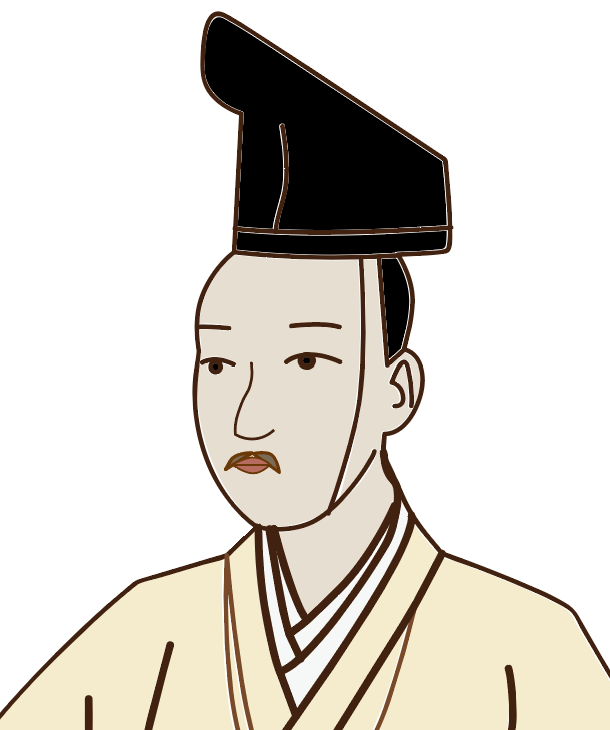
Time passed, and the Samurai period began. In 1435, Ashikaga Yoshinori (1394-1441, 足利義教) became the 6th shogun of the Muromachi shogunate (1336-1573) and initiated measures to regain direct rule over the shogunate. One of his main objectives was to control the Goso, which was being exploited by powerful temples such as Enryakuji. Yoshinori, who had served as the head priest of Shorenin Temple—the administrative headquarters of the Tendai sect—had extensive knowledge of Enryakuji’s internal affairs. As tensions grew, Yoshinori ordered the surrounding Enryakuji to impose an economic blockade and burned down several sub-temples at the base of Mt.Hiei. Enryakuji eventually surrendered, providing three high priests to Yoshinori to apologize, but they were condemned and executed. The remonstrant 24 priests set fire to the Konpon Chu-do (Main Hall) and committed self-immolation. Yoshinori's radical approach succeeded in clearing out the power of Enryakuji. It’s said that only Yoshinori could enforce this because of his experiences as a head priest of the Tendai sect and his tyrannical nature. Yoshinori’s dream to recover the shogunate’s power was realized, but his approach was radical. Yoshinori suppressed the power of his retainers and inflicted penalties on them for minor incidents. One of his chief retainers, Akamatsu Mitsusuke (1381-1441, 赤松満祐), had reservations about Yoshinori’s purge and assassinated him suddenly in 1441. After Yoshinori's death, Enryakuji’s power began to rise again.
(2) Shogun’s Deputy, Hosokawa Masamoto, Burnt Down Enryakuji
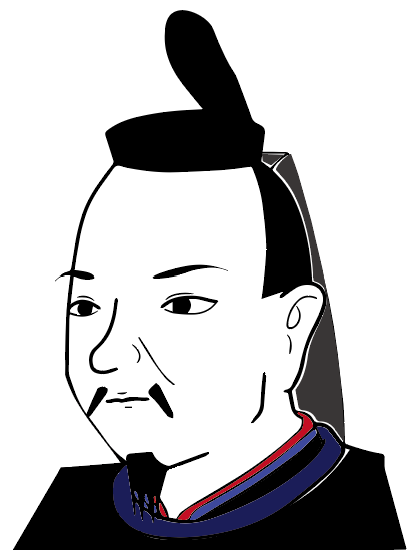
In 1493, amid the struggle of the shogun's succession, an unprecedented coup d'etat broke out in which kanrei (shogun's deputy) Hosokawa Masamoto (1466-1507, 細川政元) overthrew the 10th shogun of the Muromachi shogunate, Ashikaga Yoshiaki. Yoshiaki fled Kyoto, but six years later, in 1499, he attempted to regain power with Enryakuji as his ally. Masamoto immediately launched an offensive against Enryakuji and succeeded in burning it to the ground. Enryakuji was caught up in the struggle over the shogunate succession, and all of its major buildings, including Konpon Chū-dō and Hokke-dō, were destroyed by fire. The Eternal light was, somehow, safe. Hosokawa Masamoto then expanded his territory and became so powerful that he was known as the “half-shogun,” before being assassinated in 1507.
(3) A Powerful Warlord, Oda Nobunaga, Wiped Out The Monk Soldiers
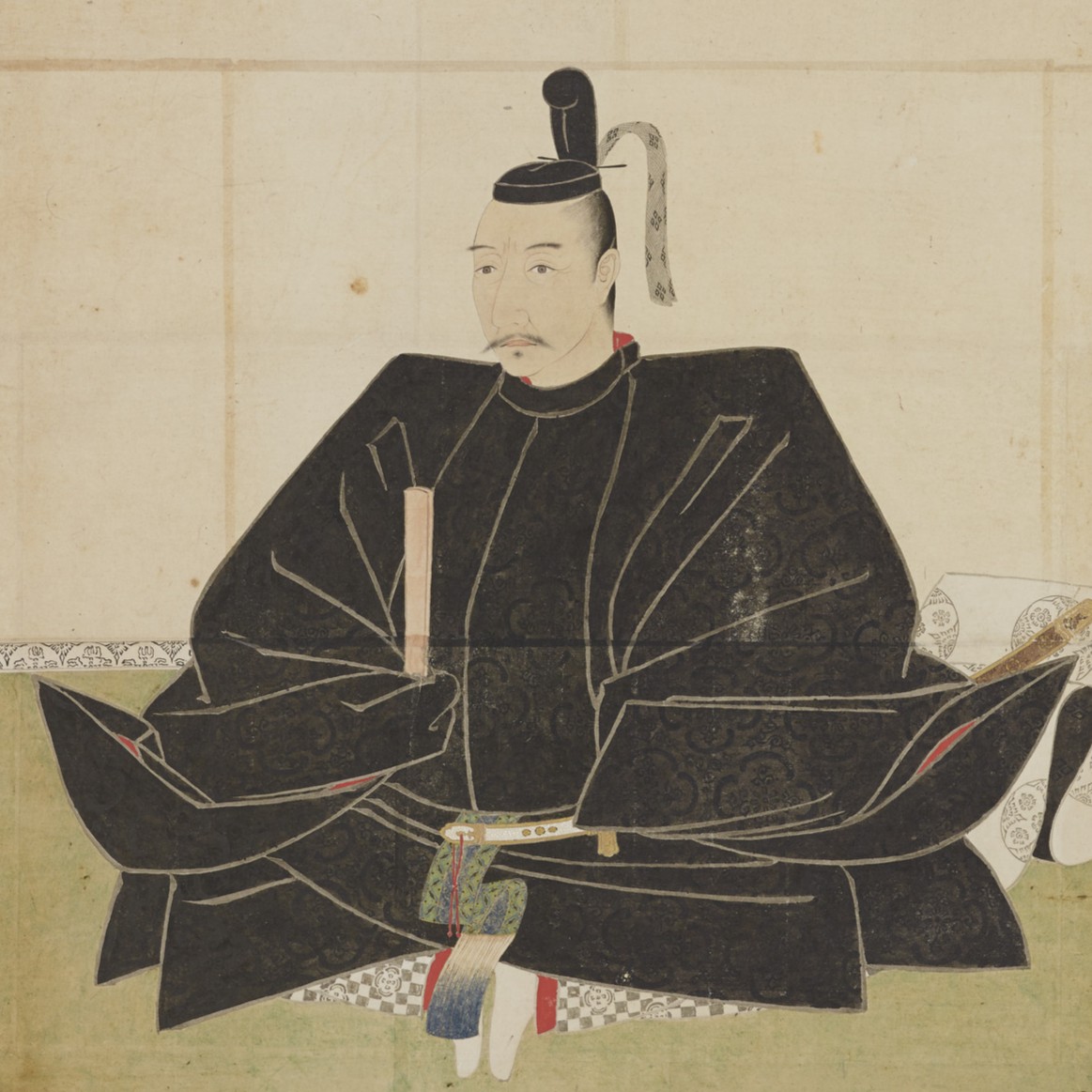
The person who smashed Enryakuji was Oda Nobunaga (1534-1582, 織田信長), a rapidly growing warlord in the 16th century. His goal was to make a peaceful nation with his military power. Halfway through this unification, in an attempt to defeat Nobunaga, more than 1,000 monk soldiers stood in front of Nobunaga, collaborating with Nobunaga's enemies, warlords such as the Asakura and Asai clans. In addition, Nobunaga did not accept the power and conduct of Enryakuji. The temple wielded political influence that rivaled that of the emperor and had accumulated enormous wealth. Much of this wealth came from tolls collected at eleven barrier checkpoints along the shores of Lake Biwa, a major waterway for traffic to Kyoto, as well as from moneylending in Kyoto. To the surprise of many, 80% of the loan sharks in Kyoto have belonged to Enryakuji. Nobunaga repeatedly called for their disarmament and devotion to Buddhist training. However, it was ignored. Nobunaga finally made up his mind. He wiped out the monk soldiers and destroyed Konpon Chu-do and some sub-temples in 1571. The Eternal Light was shockingly extinguished.
Howbeit, the Eternal Light Continued to Shine

The extinguished light was rekindled using the flame of Risshakuji Temple in Yamagata Prefecture, whose sacred light had originally been divided from Enryakuji at its founding in 860. Ever since Saichō first lit the flame, it has been sustained by the monks, who add rapeseed oil morning and evening whenever necessary. Despite repeated tribulations, the Eternal Light has continued to burn for more than 1,200 years, preserved through the determination and efforts of the monks of Enryakuji.
“Illuminate the World” of Saicho's Desire
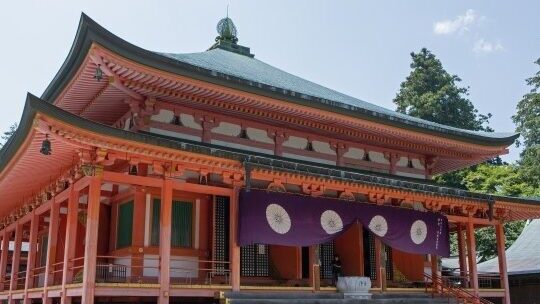
After Nobunaga’s death, Enryakuji was rebuilt by the following feudal lords, Toyotomi Hideyoshi (1537-1598, 豊臣秀吉) and Tokugawa Ieyasu (1543-1616, 徳川家康) as a purely Buddhist temple on the condition of not having monks’ soldiers nor involving politics. Please enjoy visiting Enryakuji Temple and feel Saicho’s hope of “making yourself necessary to somebody in a given place” in front of the Eternal Light at Konpon Chu-do.
Note: The Konpon Chu-do and its surrounding corridor have been undergoing major renovations since 2016, the first such restoration in about sixty years. The work is scheduled to be completed in September 2030, when a ceremony will be held to mark its completion.
Enryakuji Timeline
| 710 | Relocation of the capital to Heijo-kyo in Nara from Asuka | - | Nara |
| 752 | Todaiji Great Buddha, eye-opening | - | |
| 767 | Saicho was born | Age=1 | |
| 785 | Saicho received religious precepts at Todaiji | 19 | |
| 787 | Saicho lit the Eternal Light | 21 | |
| 794 | The relocation of the capital to the city to Heian-kyo in Kyoto | - | Heian |
| 804 | Saicho left Japan to Tang | 38 | |
| 806 | Saicho came back to Japan | 40 | |
| 822 | Saicho passed away | 56 | |
| 823 | Enryauji Temple name was given by Emperor Saga | 57 | |
| 1333 | The fall of Kamakura shogunate/The Kenmu Restoration had begun | - | Northern and Southern Courts |
| 1336 | Ashikaga Takauji estabilished Muromachi shogunate | - | Muromachi - Azuchi Momoyama (Warring State) |
| 1435 | 24 priests of Enryakuji set fire to the Konpon Chu-do | - | |
| 1499 | Enryakuji was burnt down by Hosokawa Masamoto | - | |
| 1571 | Nobunaga defeated Enryakuji Temple's monk solduers | - | |
| 1603 | Ieyasu estabished Tokugawa shogunate at Edo | - | Edo |
Recommendation to visit
Enryakuji Temple
- Access: 1-hour direct bus from Kyoto Station to Enryakuji bus center. Then take the Mt.Hiei Shuttle Bus to go around Enryakuji Temples
Risshakuji Temple
- Access: 20-min to Yamadera Station from Yamagata Station on JR Senzan line. Then, 10-min walk