One-Eyed Dragon, Date Masamune: The Life, Legacy, and Beliefs of Japan's Great Samurai
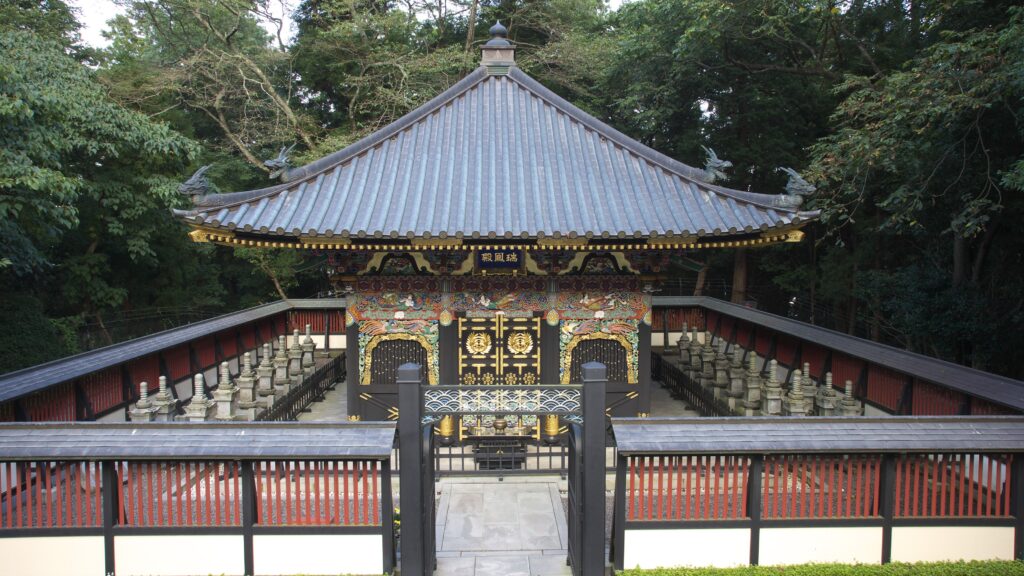
Hidden in the forests of Sendai stands Zuihouden, the mausoleum of the legendary warlord Date Masamune. Built in the lavish Momoyama style, its vibrant colors and intricate decorations reflect the bold and flamboyant spirit of the man known across Japan as the One-Eyed Dragon. Masamune left behind a final poem that reveals the philosophy that guided his turbulent life:
“I have journeyed through the warring states with unwavering beliefs, like the moon shining in the dark.”
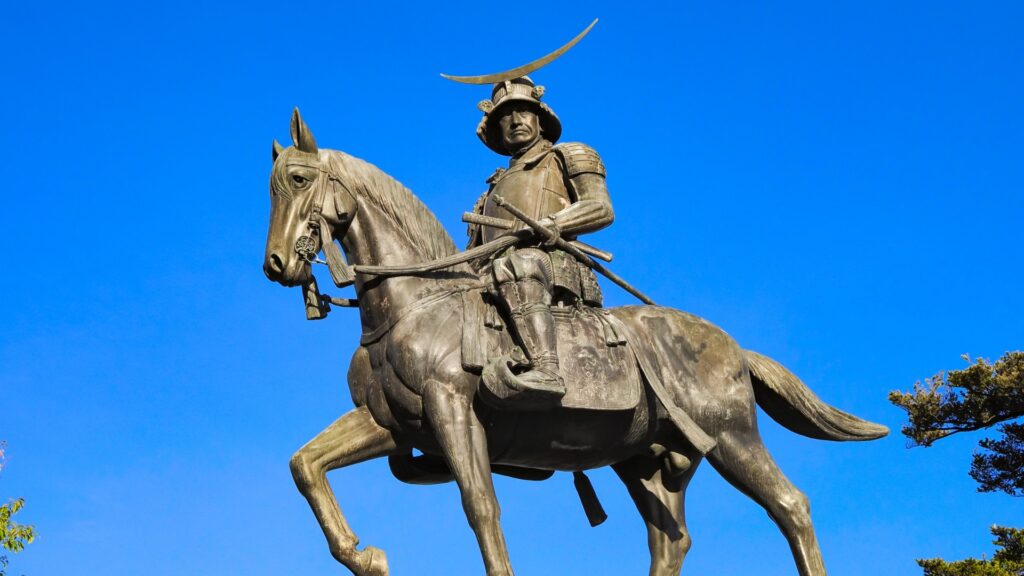
Amid the chaos of Japan's Sengoku era, Date Masamune (1567-1636, 伊達政宗) carried this "moon" of conviction within his heart, navigating betrayal, warfare, and political intrigue. His life earned the admiration of Tokugawa Iemitsu, the third shogun of the Tokugawa shogunate, who praised him as "a great samurai.” Upon Masamune’s passing in 1636, he was mourned for seven days in Edo and three days in Kyoto, a testament to his enduring legacy.
Unlocking the Splendor of Nehanmon Gate and Zuihouden Mausoleum
A tranquil stone-paved slope, lined with cedar trees, guides you to the Nehanmon Gate (Nirvana Gate), an exquisite masterpiece in black lacquer that boasts several magnificent openwork carvings. The front is adorned with the mythical kylin, an auspicious symbol heralding virtue and righteousness. Passing through the gate, you’ll find yourself in the presence of the Zuihouden and the final resting place of Date Masamune. The front door is decorated with Date’s family crest, the sendaizasa (bamboo and sparrow), and the kuyo-mon (nine-star), gilded in gold. These nine circles are believed to represent the victorious stars. Adorning the right and left sides are numerous carvings, featuring legendary phoenixes, birds that symbolize the arrival of peace, Tennyo (houri) playing musical instruments and dancing, and depictions of plants and butterflies. Notably, all animal sculptures in this sacred space appear as pairs, embodying the concept of the A-Un. The A signifies an open mouth, while the Un represents a closed one; together, they epitomize enlightenment.
(写真提供:公益財団法人瑞鳳殿 / Source :Zuihoden)
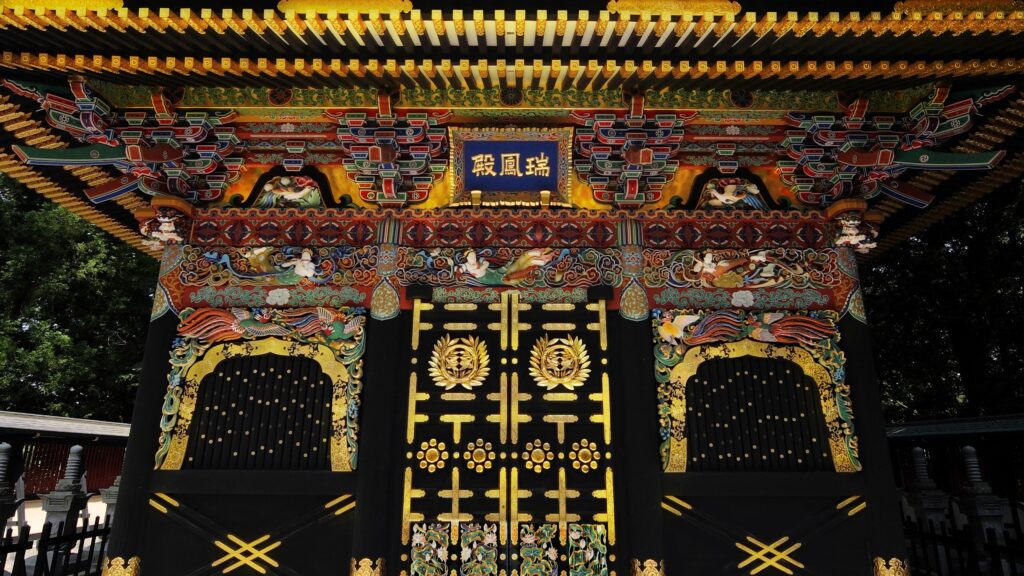
(写真提供:公益財団法人瑞鳳殿 / Source :Zuihoden)
Date Masamune's Unbreakable Strength
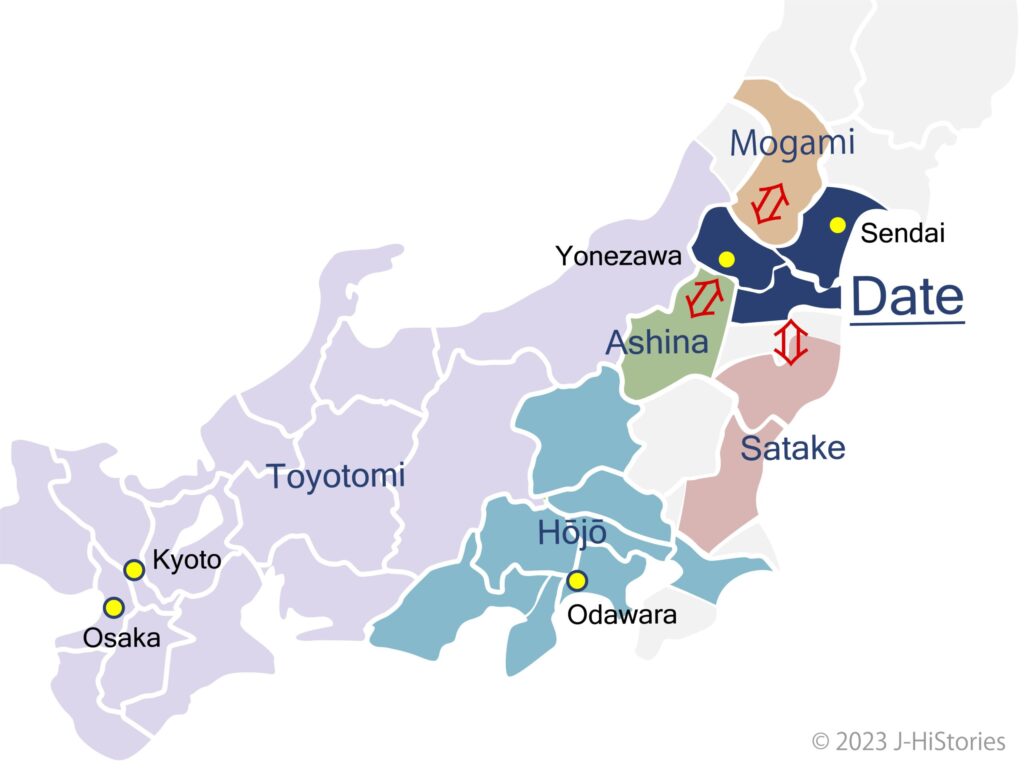
Born in 1567, Masamune, the heir of the Date Clan, faced adversity early in life when he fell ill with smallpox and lost sight in his right eye at age 5. Nevertheless, at 18, he overcame this physical challenge to inherit the family headship from his father. The Date clan tussled over territories intermittently with the Mogami clan to the north, the Ashina clan to the south, and numerous influential smaller clans to the east, including the Hatakeyama and Ouchi, leading to frequent betrayals and shifting allegiances. In 1585, a tragic event unfolded. Hatakeyama Yoshitsugu unexpectedly abducted Masamune's father, Terumune, and rode off toward his own Nihonmatsu Castle. Upon hearing it, Masamune hurried back to rescue his father during a falconry trip. However, Terumune was about to be forced to cross the Abukuma River, which marked the border of the Hatakeyama domain. If Terumune were taken hostage, Masamune’s ambition for unifying the Ou, or Tohoku region, had to be thwarted. In this dire situation, Terumune shouted, "Shoot him (Yoshitsugu) and me!” Yet, his retainers hesitated. At Masamune's command to "take him down," Masamune and his men unleashed a volley of gunfire upon Yoshitsugu. This tragically resulted in the death of his father. Terumune was 42, and Masamune was 19 at that time. Masamune’s vassals greatly appreciated their lord's decisiveness at this time, and their unity was strengthened.
Masamune's Bold Actions: Wisdom Tested by Hardship
At that time, the most powerful warlord, Toyotomi Hideyoshi(1537-1598, 豊臣秀吉), was putting the finishing touches on his plan for the unification of Japan. In 1587, he issued Sobuji-rei (a law prohibiting private warfare) to eliminate further battles among lords. On the other hand, Masamune ignored the order and continued to fight. In 1589, Masamune fought fiercely against the Ashina and Satake clans, which held great power in the southern Ou region, and won a decisive victory. With this victory, 23-year-old Masamune became the supreme ruler of the Ou and moved the main base from Yonezawa to Kurokawa Castle (Later Tsurugajo Castle) in Aizu. It was six years after the succession to family headship.
The time had come for Masamune to advance to the center and become the ruler of Japan. However, Hideyoshi stood in his way. In November 1589, Hideyoshi ordered all the feudal lords to join his army to defeat the Hojo clan at Odawara Castle, the conqueror of the Kanto region. However, Masamune, allied with the Hojo clan, did not move. For Masamune, joining the conquest of Odawara meant bowing to Hideyoshi. After much debate with his retainers, he finally decided to go to Odawara in March 1590. Soon after arriving in Odawara, he faced Hideyoshi with a do-or-die resolve, symbolized by the act of tying his hair into a bundle to make it easier for his head to be severed. According to one estimate, he dressed in white as if he were prepared to die by Hideyoshi’s reprimand. It worked well with his supposition that Hideyoshi would feel amused by his performance in white, and it ended with one word, "If you had come a little later, you would have lost your head," as he poked prostrate Masamune's neck with his stick. Not forgetting to give Masamune a good scolding, Hideyoshi moved Masamune's base from Aizu to Yonezawa, and placed his trusted retainer, Gamo Ujisato (1556-1595, 蒲生氏郷), in Aizu as a key figure in the unification of the Ou Province. Masamune’s letter to his retainers danced with his joy to keep alive, but the bitterness in his heart due to his obedience to Hideyoshi was immeasurable.
A Spirit That Defied All Odds Had Only Begun
(Source: NDL_Public Domain)
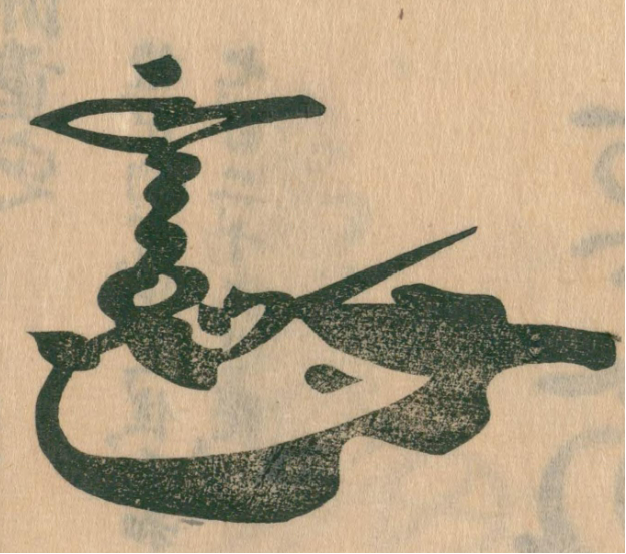
After the Siege of Odawara, several anti-Hideyoshi lords led a large-scale insurgency in the Ou region. Around the time Ujisato entered Aizu, there was a large-scale rebellion by the Kasai and Osaki clans, along with residents, whose lands had been confiscated by Hideyoshi. Masamune was said to have instigated the revolt by sending letters to the ringleaders. After obtaining the letters, Hideyoshi called Masamune again. Masamune appeared again, dressed in white with his retainers and, surprisingly, carrying a cross on his back. A similar performance did not work, and Hideyoshi confronted Masamune with the letter, pressing him to try to explain if he could. Masamune brazenly refuted the letter, saying, “This letter is a fake because there is no hole in the eyes of my seal, whose design is wagtails. The real letter has a hole punched through the eyes with a needle”. The letters in Hideyoshi’s hands did not have any holes. The letter sent to the ringleaders of the revolt did not have a hole punched in it. With this, Masamune, with his wisdom, was once again forgiven.
As time passed and Hideyoshi died in 1600, warlords from across Japan fought at Sekigahara, divided into two sides: Tokugawa Ieyasu (1543-1616, 徳川家康) (Eastern Army) and Ishida Mitsunari (1560-1600, 石田三成) (Western Army). The Battle of Sekigahara would determine the next ruler of Japan. In exchange for keeping the Uesugi clan of the Western army riveted in its territory of Aizu, the southern Ou, Masamune made Tokugawa Ieyasu promise "one million koku (yield) upon victory”. Knowing that the promise in a letter could be rebuffed at any moment during the Warring States period, Masamune began to occupy these areas by force. However, it was too short to occupy since the Battle of Sekigahara ended in one day. Ieyasu was getting to feel threatened by Masamune's territorial expansion and reneged on his promise.
From Warlord to Statesman
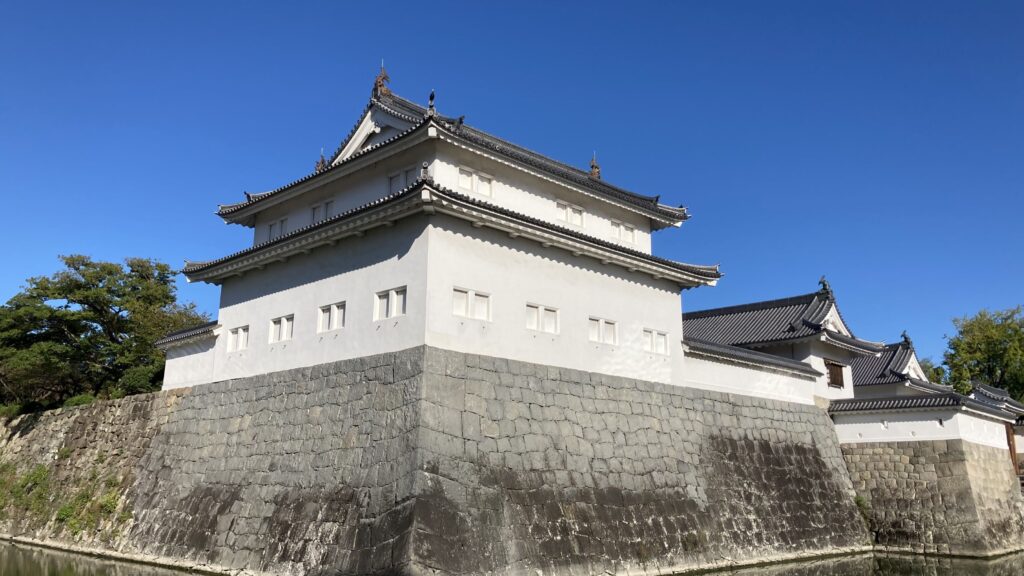
The following year, Masamune turned over a new leaf and moved his castle to Sendai, establishing the Sendai domain. He pressed on with managing the territory, encouraging his retainers to cultivate the fields. Furthermore, he wanted to enrich its finances by trading with foreign countries, and with Ieyasu's permission, he dispatched the envoys to Spain and Rome. In 1603, the San Juan Bautista, with Masamune's vassals and Tokugawa shogunate officials on board, arrived in Spain and was granted an audience with King Felipe III. While everything seemed to be going well, news came in that Ieyasu had ordered to defeat Masamune. At the same time, Ieyasu sent a letter saying, "Please come to Sunpu (Ieyasu's residence).” After one day of deliberation, Masamune, accompanied by 200 of his retainers, met with Ieyasu at Sunpu Castle. Ieyasu told Masamune what was on his mind: “If you do not come, I am going to invade Sendai." Ieyasu wanted to confirm the truth of the words of his sixth son that Masamune was Tokugawa’s enemy.
For Ieyasu, only Masamune had the counterbalancing power against Tokugawa at the time. Ieyasu asked Masamune to support his heir, Hidetada (the second shogun). At this moment, Masamune must have felt that the Warring States period was over. Thereafter, he continued to support Hidetada in strengthening the Tokugawa shogunate and preventing the nation from returning to the Warring States. When Hidetada was 53 years old, he asked Masamune to take care of the next shogun, Iemitsu (1604-1561, 徳川家光), asking, “Let him know the old days, do not hesitate to speak out against anything that is an inconvenience, and let him keep the country in peace.” Iemitsu adored Masamune by calling him "my grandfather of Date”, and he often invited Masamune to tea ceremonies and sake banquets. At Iemitsu's request, Masamune told him old stories about the Warring States period, including his memories of Hideyoshi, Ieyasu, and battles.
The Legacy of a Great Samurai
Masamune passed away at the age of 68 after making his farewells to Iemitsu at the Edo Castle. Iemitsu ordered that people mourn for seven days in Edo and three days in Kyoto for Masamune. The armor of Date Masamune shines with the front of the moon, which means "success and protection”. He lived and survived this turbulent period as a great samurai, keeping the moon (his belief) in his heart.
Timeline of Date Masamune’s Life and Major Events
| 1567 | Date Masamune was born | Age=1 | Warring States Period |
| 1573 | Muromachi shogunate ended by the 15th shogun, Yoshiaki was ousted by Nobunaga | - | Azuchi Momoyama Period |
| 1582 | Nobunaga was killed at Honnoji by Akechi Mitsuhide | 16 | |
| 1584 | Masamune took over the regins of the Date family | 18 | |
| 1585 | Masamune's father was killed by Hatakeyama | 19 | |
| 1585 | Hideyoshi became Kanpaku (chief advisor to the Emperor) | 19 | |
| 1586 | Hideyoshi built the huge Osaka castle | 20 | |
| 1587 | Hideyoshi issued Sobuji-rei to Tohoku region | 21 | |
| 1589 | Masamune defeated the Asina clan and took control of Southern Ou. | 23 | |
| 1590 | Hideyoshi unified the nation | 24 | |
| 1591 | Masamune moved to Miyagi prefecture | 25 | |
| 1598 | Hideyoshi passed away | 32 | |
| 1600 | Tokugawa Ieyasu defeated Ishida Mitsunari, Hideyoshi's right arm at the battle of Sekigahara | 33 | |
| 1601 | Masamune built Sendai castle | 35 | |
| 1603 | Tokugawa Ieyasu established Tokugawa shogunate at Edo | 37 | Edo Period |
| 1605 | Tokugawa Hidetada became the 2nd shogun of Tokugawa shogunate | 39 | |
| 1613 | Masamune dispatched Hasekura Tsunenaga to Rome, Spain | 47 | |
| 1615 | Toyotomi's Osaka Castle burnt down to the ground at the Summer Siege of Osaka | 49 | |
| 1616 | Ieyasu passed away at the age of 75 | 50 | |
| 1623 | Tokugawa Iemistu became the 3rd shogun of Tokugawa shogunate | 57 | |
| 1636 | Masamune passed away in Edo | 70 |
Recommendations to visit
Zuihoden Mausoleum
- Access: 90 minutes from Tokyo Station to Sendai Station on Tohoku Shinkansen. 13 minutes from Sendai Station on Sendai sightseeing loop bus. Get off "Zuihoden-mae (瑞殿前)”
The Site of Sendai Castle
- Access: 90 minutes from Tokyo Station to Sendai Station on Tohoku Shinkansen. 26 minutes from Sendai Station #16 bus stop on Sendai sightseeing loop bus. Get off "Sendaijoato-mae (仙台城跡前)”