
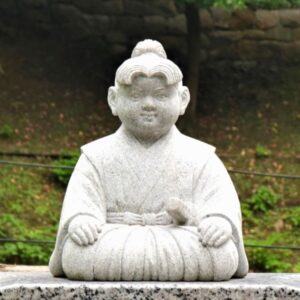
Okazaki Castle, Hardship Made the Man: Tokugawa Ieyasu
Tokugawa Ieyasu (1543-1616, 徳川家康) was separated from his mother at the age of 3, became a hostage of Oda Nobuhide, father of Oda Nobunaga (1534-1582, 織田信長) at the age of 6, lost his father at the age of 8, then became a hostage of the Imagawa Yoshimoto (1519-1560, 今川義元). In total, he spent about 14 years […]

Honpoji Temple: BIrthplace of the Rimpa School and Hon'ami Koetsu's World of Faith and Beauty
The tender green of the trees from outside is reflected on the polished stone floor at Honpoji Temple in Kyoto. The colors shimmer on the black surface and create a tranquil atmosphere. It’s incredibly beautiful. Honpoji Temple stands as one of the temples within the Nichiren Sect of Buddhism, established by Priest Nisshin during the […]

Ninjas, Greatly Active regardless Day and Night on the Front Lines during the Warring State Period
Ninjas had mastered superhuman ninjutsu, the art of warfare. In times of peace, they would infiltrate enemy territory to gather information and engage in intrigue and reconnaissance, and in times of war, they would infiltrate enemy lines to commit arson and assassination. For the warlords of the Warring States Period (1467-1590), Ninjas were indispensable for […]
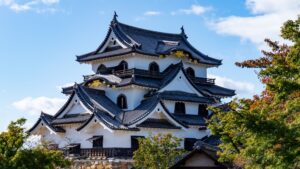
Hikone Castle, The life of Ii Naomasa, a Brave Warrior with Strong Diplomatic Skills
Hikone Castle, situated atop Mount Kinko along the shore of Lake Biwa, retains its stunning three-story structure, adorned with its white stucco exterior walls as it was in the past. The castle tower, a national treasure, showcases an elegant and rhythmical architectural style adorned with three types of gables: Kirizuma, Kara-hafu, and Iriomoya. Adding to […]
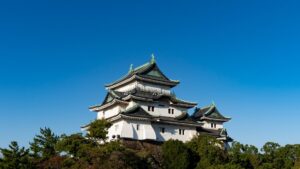
Wakayama Castle, A Great Lord, Yorinobu, laid the foundation of the Kishu's prosperity
In 1619, three years after Tokugawa Ieyasu's passing, his 10th son, Tokugawa Yorinobu (1602-1671, 徳川頼宣), received 555,000 koku, equivalent to the rice crop of yield (*) and established the Kishu domain (present-day Wakayama and southern Mie Prefectures). Wakayama Castle, the Kishu Tokugawa Family's residence, was extended and constructed at the mouth of the Kino River, […]
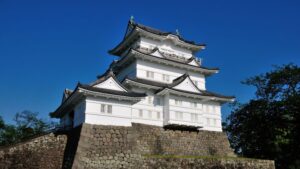
Odawara Castle: Hojo Clan's Independence from shogunate and People-Centered Policy
A remarkable Hojo clan, a pioneering and the final force of Sengoku Daimyo, a territorial lord in the Warring States Period (1467-1573), who reigned supreme in the Kanto region for a century-spanning five generations. Their unwavering ambition was to be independent of the vested interest of the Muromachi shogunate (1336-1573) and to safeguard the livelihoods […]
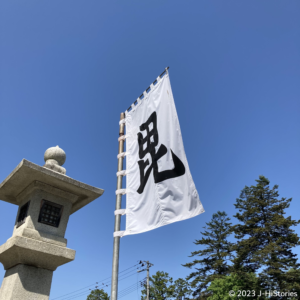
The God of War, Kenshin, and the Muromachi shogunate Revival
Uesugi Kenshin (1530-1578, 上杉謙信) was a fervent believer in the god of war, Bishamonten (毘沙門天), using one of the letters of '毘' as an emblem on his own flag, and fighting under the banner of 'Bi'. During his lifetime, he lost only twice out of 71 battles, making him a true military god. During the […]
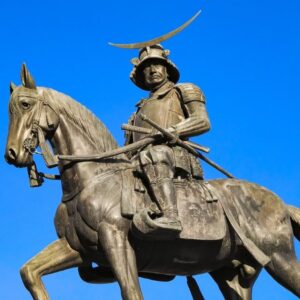
One-Eyed Dragon, Date Masamune: The Life, Legacy, and Beliefs of Japan's Great Samurai
Discover the story of Date Masamune, the legendary One-Eyed Dragon of Japan. Explore his beliefs, legacy, and the magnificent Zuihoden mausoleum that reflects the spirit of this great samurai.
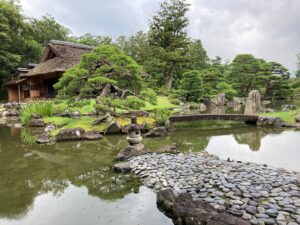
The Katsura Imperial Villa, authentically beautiful architecture
Situated in the southern province of Kyoto, along the picturesque Katsura River, the Katsura Imperial Villa, a masterpiece of beauty, served as a detached villa of two aesthetic crown princes: Prince Toshihito (1579~1629, 八条宮智仁親王) and his son, Prince Toshitada (1619~1662, 八条宮智忠親王). Its construction started in 1628 and was completed in 1658 during the transition from […]
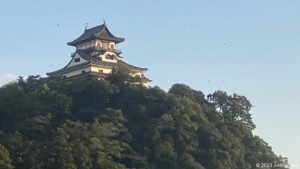
Inuyama Castle: Japan's Oldest Original Castle and the Legacy of Naruse Masanari
Discover the history of Inuyama Castle, Japan’s oldest original National Treasure castle. Explore its samurai legacy and the life of Naruse Masanari, trusted retainer of Tokugawa Ieyasu.