
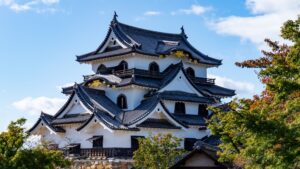
Hikone Castle, The Life of Ii Naomasa, a Brave Warrior with Strong Diplomatic Skills
Hikone Castle, situated atop Mount Kinko along the shore of Lake Biwa, retains its stunning three-story structure, adorned with its white stucco exterior walls as it was in the past. The castle tower, a national treasure, showcases an elegant and rhythmical architectural style adorned with three types of gables: Kirizuma, Kara-hafu, and Iriomoya. Adding to […]
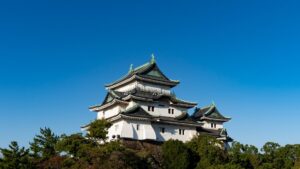
Wakayama Castle: A Great Lord, Yorinobu, lay the Foundation of Kishu's Prosperity
In 1619, three years after Tokugawa Ieyasu's passing, his 10th son, Tokugawa Yorinobu (1602-1671, 徳川頼宣), received 555,000 koku, equivalent to the rice crop yield (*) and established the Kishu domain (present-day Wakayama and southern Mie Prefectures). Wakayama Castle, the Kishu Tokugawa Family's residence, was extended and constructed at the mouth of the Kino River, which […]
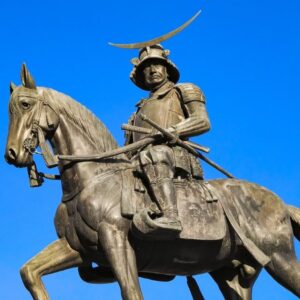
One-Eyed Dragon, Date Masamune: The Life, Legacy, and Beliefs of Japan's Great Samurai
Discover the story of Date Masamune, the legendary One-Eyed Dragon of Japan. Explore his beliefs, legacy, and the magnificent Zuihoden mausoleum that reflects the spirit of this great samurai.
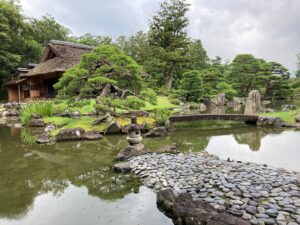
The Katsura Imperial Villa, authentically beautiful architecture
Situated in the southern Province of Kyoto, along the picturesque Katsura River, the Katsura Imperial Villa, a masterpiece of beauty, served as a detached villa of two aesthetic crown princes: Prince Toshihito (1579~1629, 八条宮智仁親王) and his son, Prince Toshitada (1619~1662, 八条宮智忠親王). Its construction started in 1628 and was completed in 1658 during the transition from […]
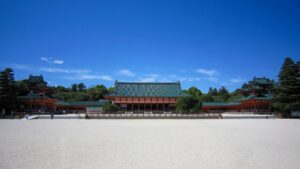
Heian Jingu Shrine: The Story of the First and Last Emperors of Kyoto
Discover Heian Jingu Shrine and the story of Kyoto’s 1,100-year legacy as Japan’s capital, told through Emperors Kanmu and Komei.

Konkai Komyoji Temple, the base of the Shinsengumi samurai who followed the Bushido
On the days of the vernal equinox and the autumnal equinoxes, the Konkai Komyoji Temple offers a breathtaking view of the setting sun turning vermilion in the western sky. The temple was founded in 1175 when Honen, a founder of the Jodo sect of Buddhism, descended from Mount Hiei to spread his teachings here. Situated […]
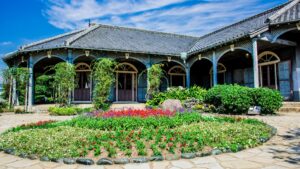
Thomas Blake Glover, a brilliant turnaround from a weapons merchant to a contributor to Japan’s industrialization
Glover House stands as the most renowned Western residence constructed within a foreign settlement in Nagasaki. It holds the distinction of being one of Japan’s World Heritage sites: the Meiji Industrial Revolution; Iron, Steal, Shipbuilding, and Coal Mining. In 1859, Thomas Blake Glover embarked on a journey to Japan as an employee of the tea […]

Cherry Blossoms and Red Leaves at Hakodate Goryokaku Fort
Goryokaku Fort (五稜郭) is Japan’s first western-style star fort located in Hakodate. The view from the top of the observatory, situated 90 meters above the ground of Goryokaku Park Tower, offers a truly spectacular sight. The iconic five-star shape, filled with approximately 1,600 cherry blossom trees in spring and adorned with vibrant autumn leaves in […]
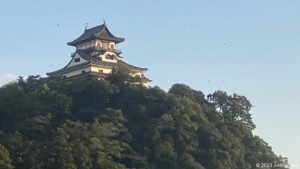
Inuyama Castle: Japan's Oldest Original Castle and the Legacy of Naruse Masanari
Discover the history of Inuyama Castle, Japan’s oldest original National Treasure castle. Explore its samurai legacy and the life of Naruse Masanari, trusted retainer of Tokugawa Ieyasu.
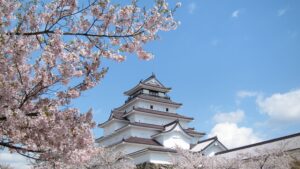
Tsurugajo Castle in Aizu, A Symbol of Samurai Loyalty During the Meiji Restoration
Bells rang in the center of the castle town of the Aizu domain, signaling the invasion of Meiji government forces. Despite the Aizu domain's allegiance to the Tokugawa shogunate and generations of shoguns, the castle fell under incessant bombardment. This is in contrast to the shogun's residence, Edo Castle, which surrendered without bloodshed. Why did […]