Kyoto Sento Imperial Palace: “Hidden Palace” Where an Abdicated Emperor Defied the Tokugawa Shogunate
The Sento Imperial Palace in Kyoto was built in the early Edo period as the residence of Emperor Go-Mizunoo (1596-1680, 後水尾天皇) after his sudden abdication in defiance of the growing power of the Tokugawa shogunate. Constructed southeast of the Kyoto Imperial Palace, its gardens were designed by Kobori Enshu, a master landscape architect, celebrated tea master, and official architect of the Edo shogunate.
The word Sento refers to the purified dwelling place of hermits who have transcended the secular world. True to its name, the palace garden possesses an otherworldly stillness and elegance, despite standing in the heart of Kyoto. In autumn, fiery maple leaves transform the pond garden into a sea of color reflected across the water’s surface. In early summer, cascading wisteria drapes over the iconic zigzag bridges, creating scenes of refined beauty. Here, one finds the very essence of the graceful elegance long idealized in Japanese culture.
The Beauty of Sento Imperial Palace
Suhama — The Dreamlike Shoreline Made from 100,000 Stones
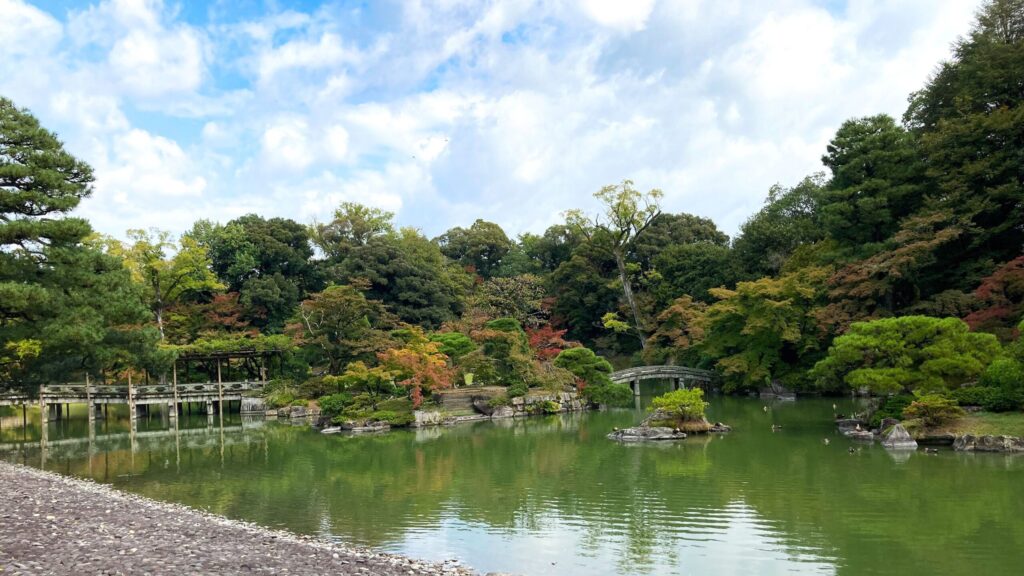
Sento Imperial Palace features an expansive strolling-pond garden centered on its North and South Ponds. Among its most striking features is the suhama shoreline extending along the southern and western edges of the South Pond. The shoreline is composed of approximately 100,000 smooth, rounded andesite stones. According to historical accounts, each stone was individually wrapped in cotton and transported from Yoshihama (present-day Yugawara in Kanagawa Prefecture). Though entirely artificial, the shoreline was admired for its astonishing delicacy and natural beauty. The carefully arranged stones, gentle curves, and reflections across the water create a landscape resembling a living Japanese painting.
Seikatei — The Only Remaining Edo-Period Structure
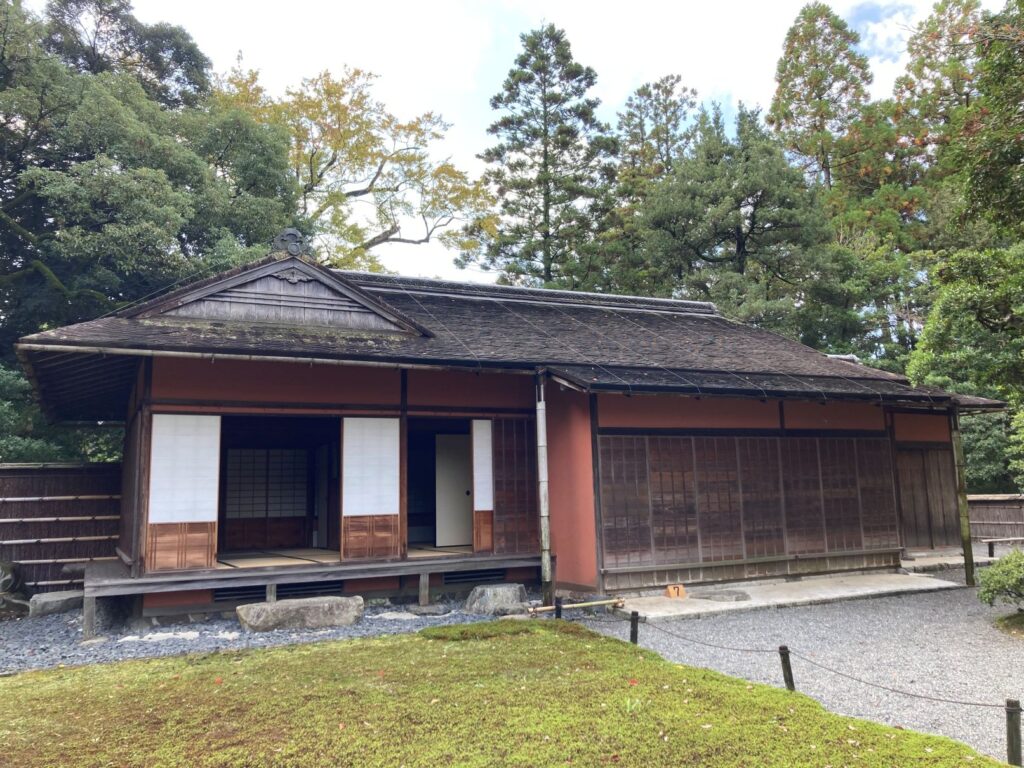
Standing quietly beside the South Pond is Seikatei, a teahouse that remains the only surviving Edo-period structure within the Sento Imperial Palace grounds. Its shingled bark roof and perfectly aligned paper sliding screens embody a restrained yet dignified beauty. Though simple in appearance, the structure radiates an atmosphere of cool elegance and refinement. In spring, cherry blossoms envelop the teahouse, revealing the serene and understated beauty long cherished in Japanese aesthetics.
The Garden of Autumn Leaves — A Different World in Kyoto
During the autumn foliage season, the Sento Imperial Palace becomes one of Kyoto’s most ethereal landscapes. Crimson maple leaves and golden ginkgo trees surround the ponds, their colors shimmering across the water in the autumn wind. The reflections blur the boundary between reality and illusion, creating an atmosphere of profound, almost mystical beauty.
Sento Imperial Palace is not simply a garden to observe. It is a garden that reveals itself fully only through walking.
Emperor Go-Mizunoo Abdicated in Defiance of the Shogunate
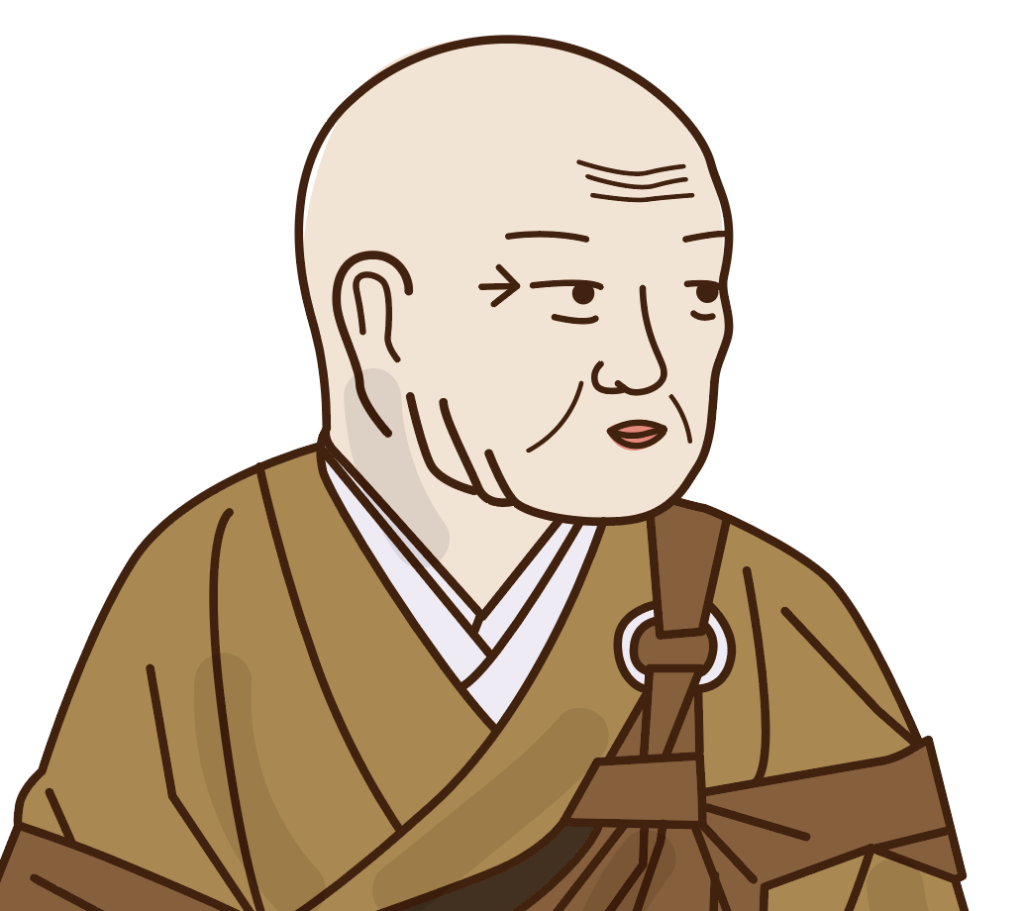
The 17th century was a period in which the Tokugawa shogunate steadily tightened its control over the imperial court through laws such as the Laws for the Imperial Court and Nobility.
The defining conflict of the era became known as the Purple Robe Incident. More than sixty imperial decrees issued by Emperor Go-Mizunoo granting purple robes to high-ranking Buddhist monks were nullified by the shogunate. The situation reached a breaking point when the shogunate attempted to send the wet nurse of the third shogun, Tokugawa Iemitsu, to an audience with the emperor to gather information from within the imperial court. For an ordinary wet nurse to be granted an imperial audience was unprecedented and deeply humiliating for the throne. Yet Emperor Go-Mizunoo had little choice but to comply.
In 1629, without consulting the shogunate, the emperor suddenly abdicated. He transferred the throne to his daughter and retired as emperor, taking up residence in the Sento Imperial Palace. Because tradition prohibited a reigning empress from taking a husband, the Tokugawa shogunate’s long-term ambition of placing an emperor of Tokugawa blood on the throne was effectively thwarted at that moment.
In his later years, he devoted himself to the creation of Shugakuin Imperial Villa, where he is said to have enjoyed strolling through the gardens with Empress Tofukumon’in.
Go-Mizunoo Timeline
| 1596 | Emperor Gomizunoo was born | Age =1 | Momoyama Period |
| 1600 | Tokugawa Ieyasu defeated Ishida Mitsunari, Hideyoshi's right arm at the battle of Sekigahara | 4 | |
| 1603 | Ieyasu estabished Tokugawa Shogunate at Edo | 6 | Edo Period |
| 1603 | Ieyasu built Nijo-jo Caslte | 6 | |
| 1611 | Emperor Gomizunoo was enthroned | 15 | |
| 1615 | Issued a set of regulations that applied to the emperor and the court nobles | 18 | |
| 1620 | Tokugawa Masako married Emperor Gpmizunoo | 23 | |
| 1625 | Emperor Gomizunoo inherited the secret teachings of the “Kokin-waka-shu” | 28 | |
| 1626 | Emperor Gomizunoo visited Nijojo Castle | 29 | |
| 1627 | Shie Incident | 30 | |
| 1629 | Emperor Gomizunoo executed the abdication | 32 | |
| 1629~ | More than 30 flower banquets were hosted by Gomizunoo-in | 32 | |
| 1655 | The Shugakuin Imperial Villa was constracted | 59 | |
| 1678 | Gomizunoo-in compiled a personal anthology, "Gomizunoo-in-Shu" | 82 | |
| 1680 | Gomizunoo-in passed away | 85 |
Recommendations to Visit
Kyoto Sento Imperial Palace
- Access: 15-minute walk from Marutamachi Station on the Subway Karasuma Line from Kyoto Station.
Shugakuin Imperial Villa
- Access: 1 hour from Kyoto Station. Take bus #5 bound for "Iwakurashojyamae (岩倉総社前)” at A1. Got off at "Shugakuin Rikyu-michi (修学院離宮道)" bus stop, then a 15-minute walk.