Omi Shrine: Emperor Tenji’s Otsu Palace Site and the Spiritual Center of Competitive Karuta
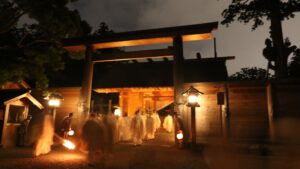
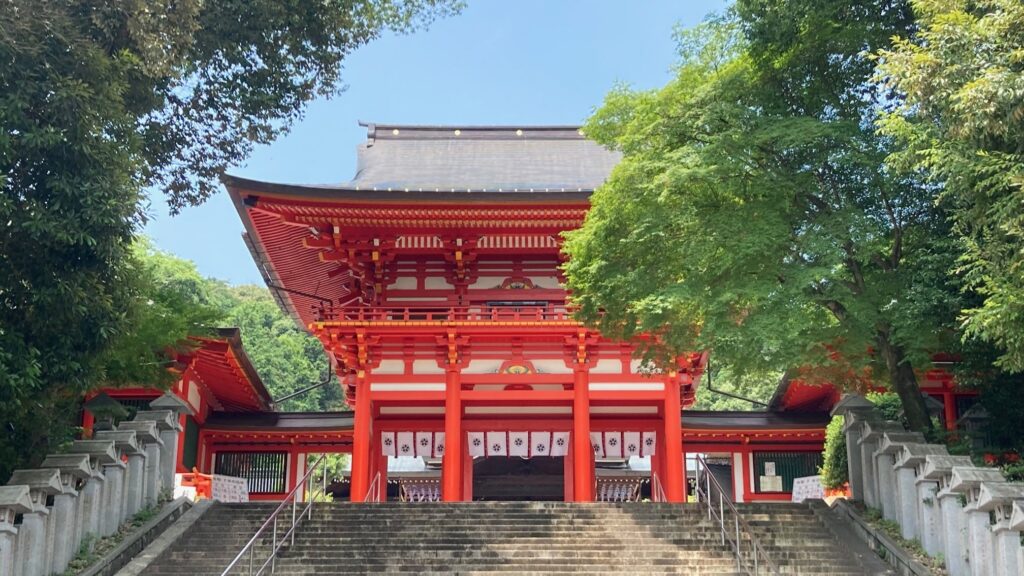
Upon arriving at Ōmi Shrine, visitors are greeted by a fiery vermilion rōmon (two-story gate), its brilliant color standing out vividly against the clear blue sky. This shrine stands on the site of Ōtsu Palace, where Emperor Tenji, the 38th emperor of Japan, relocated the capital from Naniwa Palace in Osaka. As the composer of the opening poem of the Ogura Hyakunin Isshu (One Hundred Poets, One Poem Each), Emperor Tenji links the shrine to Japan's poetic tradition, earning Ōmi Shrine its reputation as the spiritual home of competitive Karuta (poetry cards) and, in recent years, as a pilgrimage site for fans of the film Chihayafuru. Located on the western shore of Lake Biwa, Ōmi Shrine is filled with episodes from the life and achievements of Emperor Tenji.
A Crushing Defeat at the Battle of Baekgang
In the 7th century, the Korean Peninsula was marked by tension as the three kingdoms of Goguryeo, Silla, and Baekje struggled for dominance. In 660, Silla allied itself with the powerful Tang Dynasty of China and destroyed Baekje. The surviving Baekje officials, having long maintained close ties with Japan (then known as Wa), appealed for military assistance. They sought to restore their kingdom by returning Prince Pungjang, who had been living in Japan, to Baekje.
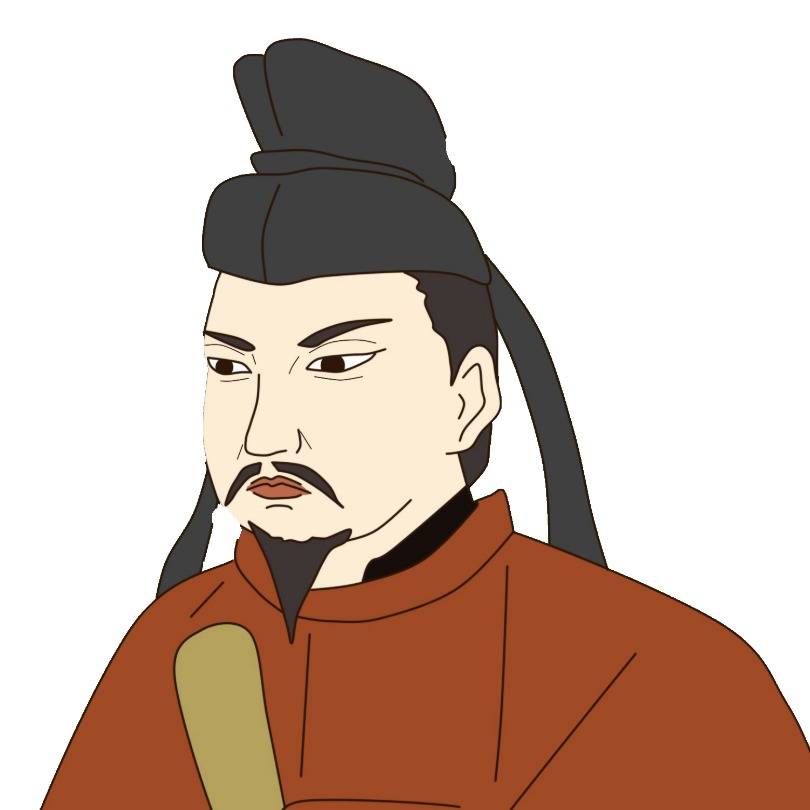
Responding to this request, Empress Saimei, the mother of Prince Naka no Ōe, later Emperor Tenji (626–672, 中大兄皇子/天智天皇), decided to dispatch troops. Despite being 61 years old at the time, she personally led the army to Kyushu. However, in the following year, 661, Empress Saimei suddenly passed away in Tsukushi (present-day Fukuoka Prefecture). Command of the forces then fell to Prince Naka no Ōe.
Thus, the battle commenced at Baekgang (near today’s Geum River in southwestern Korea). Facing the massive and heavily fortified warships of the Tang forces, the Japanese fleet—consisting mainly of smaller vessels—stood little chance, whether in close combat or ranged attacks. Surrounded by Tang ships and subjected to fire attacks, the tightly packed Japanese fleet was engulfed in flames one after another and ultimately annihilated. Against the battle-hardened Tang army, Japan suffered a devastating and total defeat.
Building a Defensive Network
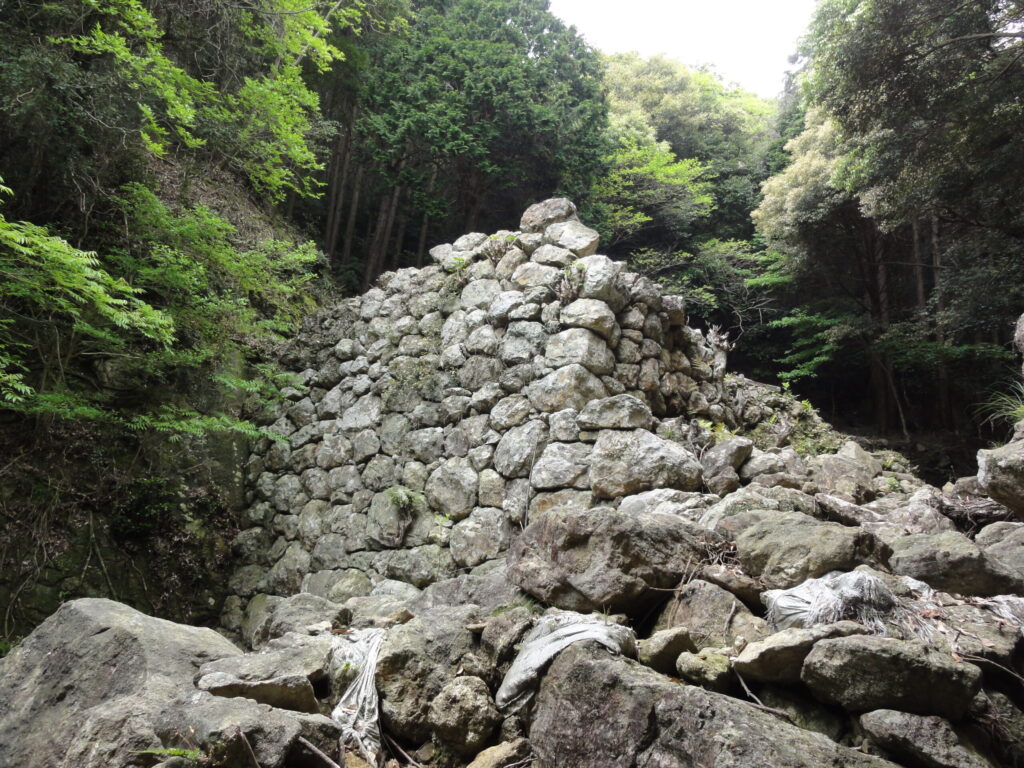
@ Nagasaki Prefecture Tourism Association
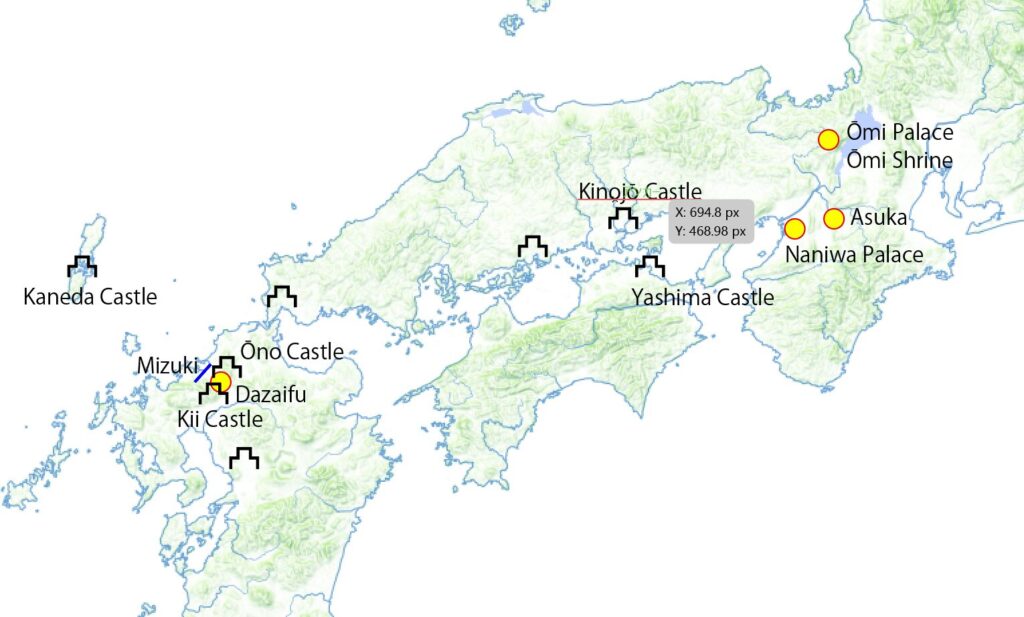
Fearing a possible invasion of the Japanese mainland by Tang and Silla forces, Prince Naka no Ōe began strengthening defensive fortifications, particularly in western Japan. Castles such as Kaneda Castle on Tsushima served as the front line. In northern Kyushu, to protect Dazaifu—the political and military center of western Japan at the time—major defenses were constructed, including the 1.2-kilometer-long Mizuki earthwork, as well as Ōno Castle and Kii Castle. Fortresses such as Kinojō Castle and Yashima Castle were also built along the Seto Inland Sea, reinforcing the defensive network.
In 667, the capital was moved from Naniwa Palace, which faced Osaka Bay and was vulnerable to attack, to the more inland Ōtsu Palace. The following year, in 668, Prince Naka no Ōe ascended the throne as Emperor Tenji.
The Creation of a Strong State
Confronted with the reality of defeat, Emperor Tenji recognized the need to transform Japan into a stronger nation. He worked to establish a centralized state with the emperor at its apex. The promulgation of the Ōmi Code laid the groundwork for the ritsuryō system of law and governance. Through the creation of a national census (Kōgo Nenjakuseki), the state directly controlled land and people, paving the way for the handen shūju system of land redistribution and stabilizing taxation and military conscription.
Meanwhile, after the fall of Baekje and Goguryeo, Tang and Silla turned against each other in their struggle for control of the Korean Peninsula. As both powers focused on their mutual conflict, an invasion of Japan never materialized.
The First Poem of the Ogura Hyakunin Isshu
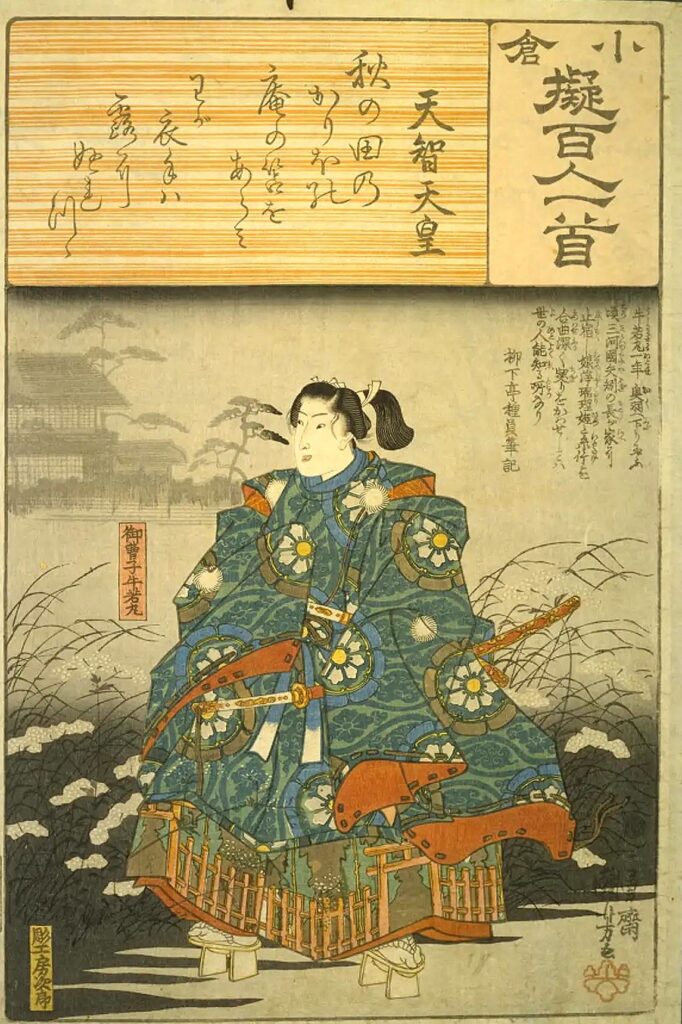
(@ NDL)
The Ogura Hyakunin Isshu begins with this poem by Emperor Tenji:
Over the autumn fields
The roof of the harvest hut
Is so coarsely thatched,
That my sleeves are getting wet
With the falling of the dew.
This anthology, compiled by Fujiwara Teika, the late Heian-period court noble and waka poet, consists of one representative poem each from one hundred poets. Emperor Tenji’s poem was placed first not only because he was the earliest poet chronologically, but also because he was regarded as a special figure—an emperor who laid the foundations of the Japanese state.
The poem reflects compassion for farmers' hardships and a deep respect for agriculture, the backbone of the nation. Quietly expressed within it are Emperor Tenji’s awareness and sense of responsibility as a ruler.
Ōtsu Palace Becomes Ruins in Five and a Half Years
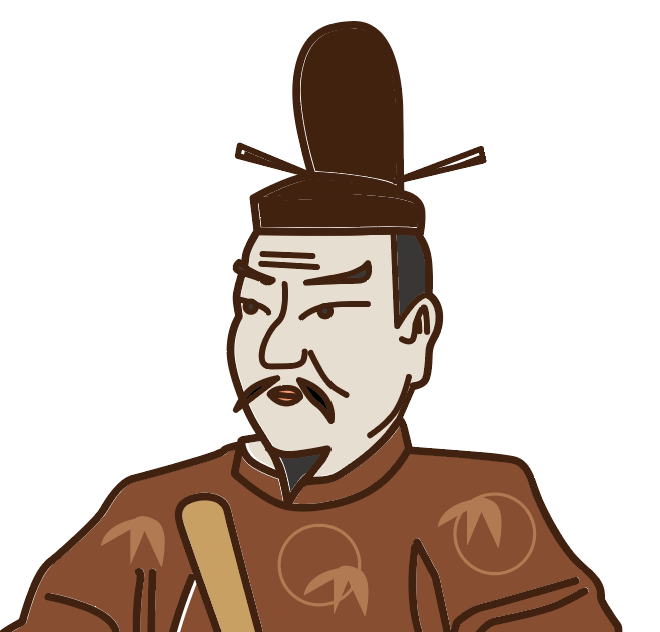
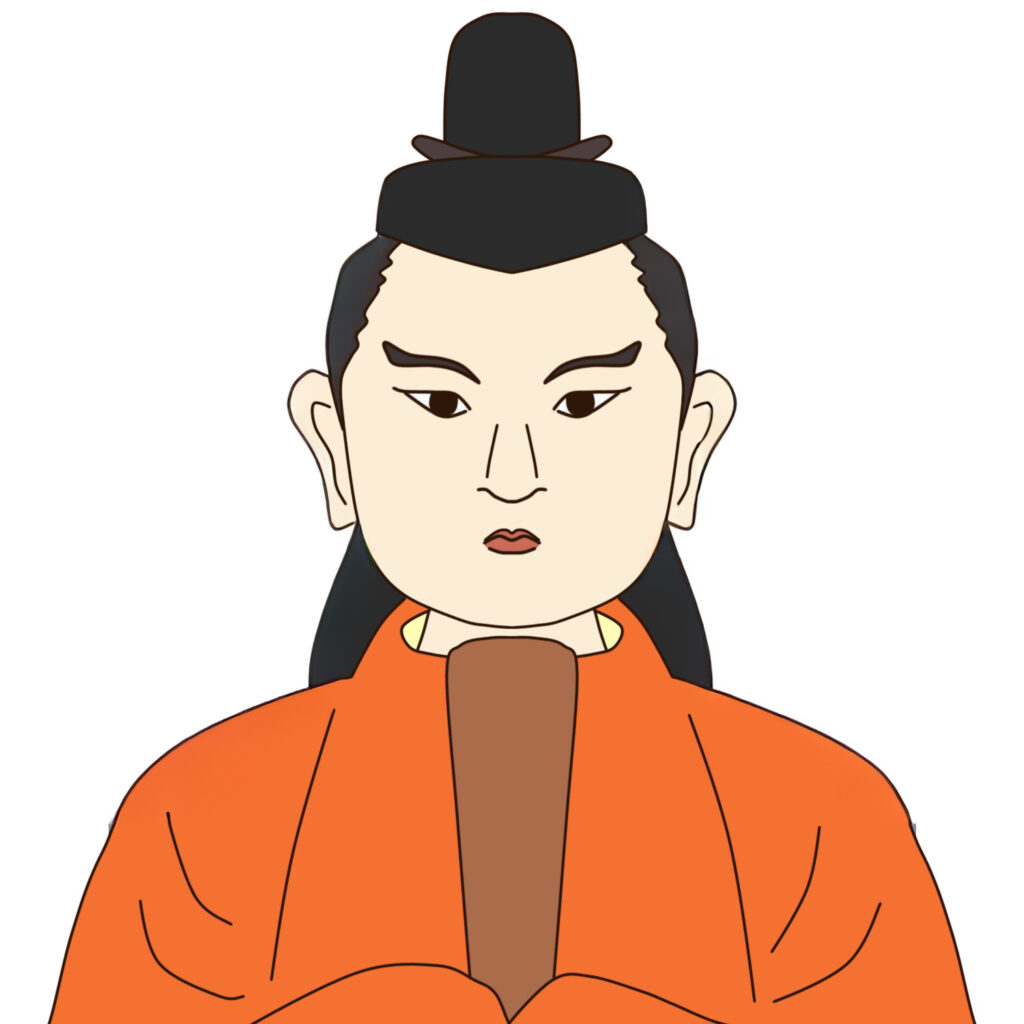
Ōtsu Palace itself fell into ruin after only about five and a half years. Following Emperor Tenji’s death, a struggle for succession erupted between his son, Prince Ōtomo, and his younger brother, Prince Ōama, later Emperor Tenmu (?–686, 大海皇子/天武天皇). This conflict culminated in the Jinshin War, one of the greatest civil wars in ancient Japan.
Yet the vision of the state that Emperor Tenji sought to build did not vanish. It continues to be passed down at Ōmi Shrine even today. The life of Emperor Tenji—who lived through an era of reform and tension—is quietly and enduringly told in this place.
Emperor Tenji's Timeline
| Tenji | ||
| 626 | The birth of Prince Nakano-Oe | Age=1 |
| 645 | Soga Iruka is assassinated by Prince Naka-no-Ōe (Isshi Incident) | 20 |
| 646 | The Imperial Reform Edict is issued | 21 |
| 660 | Baekje is defeated by the Tang Dynasty and Silla | 35 |
| 663 | The Battle of Baekgang | 38 |
| 667 | Relocation of the Capital to Ōmi Palace | 42 |
| 668 | Emperor Tenji (Prince Nakano-Oe) ascends the throne | 43 |
| 669 | Kamatari passes away and given Fujiwara name | 44 |
| 670 | Emperor Tenji compiles Japan's oldest family register | 45 |
| 672 | Emperor Tenji passes away | 47 |
| 672 | Jinshin War | - |
| 673 | Emperor Tenmu ascends the throne | - |
Recommendations to visit
Access: 10 minutes from Kyoto Station to Ōtsu Station on the JR Kosai Line. Then take the Keihan Line to Ōmijingumae Station. 9-min walk to Ōmi Jingu Shrine