Raikyuji Temple Garden: Kobori Enshu and the Samurai Aesthetic of Kirei-Sabi
Kobori Enshu (Kobori Enshū) created a new garden aesthetic suited to the era of peace established by Tokugawa Ieyasu. Stroll-style pond gardens, Horai gardens expressing cranes and turtles as symbols of longevity, bold straight lines—such as bridges and stone-paved pathways—intersecting with natural curves, and dynamic sculpted hedges—together these elements create a refined and luminous world in harmony with samurai society.
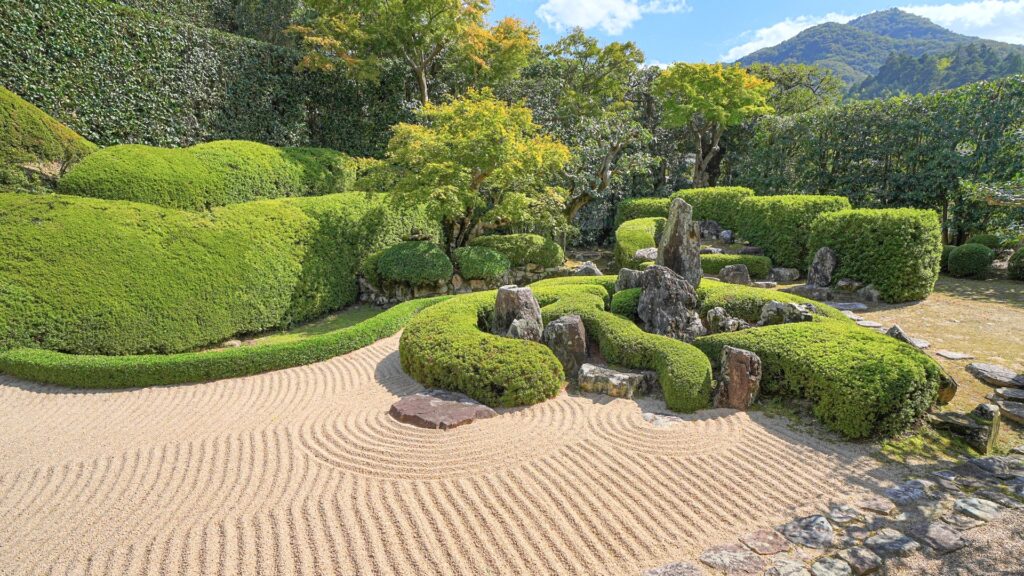
Also celebrated as one of Japan’s three great tea masters alongside Sen no Rikyu and Furuta Oribe, Kobori Enshū brought elegance and brightness to the spirit of wabi-sabi, completing an aesthetic later known as kirei-sabi in garden design as well. An early masterpiece, Raikyu-ji Garden in Okayama prefecture, features bold azalea clipping shaped into rhythmic ocean waves (seigaiha), with crane and turtle islands set within a sea of white sand—an exquisite dry landscape Horai garden. In spring, layers of pink and red azaleas glow against fresh greenery, while in autumn the sculpted forms stand out sharply, revealing the structural beauty of Enshu’s design.
A Magistrate of Monumental Projects
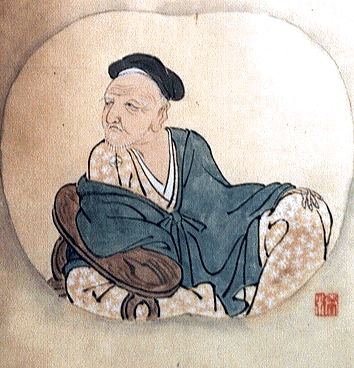
Kobori Enshu (Kobori Masakazu, 1579–1647, 小堀遠州) lived through the dramatic transition from the Warring States period (1467-1603) to the early Edo era (1603-1868). He was not only a tea master and garden designer, but also a distinguished magistrate who supported the Tokugawa shogunate. Together with his father, he first served Toyotomi Hidenaga, the younger brother of Toyotomi Hideyoshi (1537-1598, 豊臣秀吉). After Hidenaga’s death, Masakazu became a direct retainer of Hideyoshi. When Hideyoshi died in 1598, he entered the service of Tokugawa Ieyasu (1543-1616, 徳川家康).
At the pivotal Battle of Sekigahara in 1600, the 21-year-old Masakazu accompanied his father at Ieyasu’s headquarters. Serving as a trusted aide, he relayed reports from the front lines and delivered Ieyasu’s commands—an essential role at the strategic center of the battle. Following victory, Ieyasu was appointed shogun and established the Edo shogunate. From this point forward, Masakazu’s true abilities emerged in his role as Sakuji-bugyo (Commissioner of Public Works).
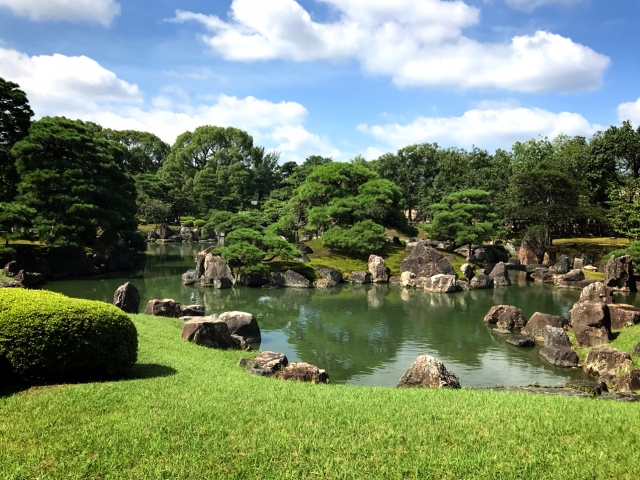
He oversaw major state projects including the construction of the main keep of Nagoya Castle (beginning in 1610), the extensive renovations of Sunpu Castle, the renovation of Nijo-jo Castle and its Ninomaru Garden for the imperial visit of Emperor Go-Mizunoo, and the construction of the Honmaru Palace at Edo Castle. These were vast undertakings that represented the prestige of the shogunate, and Masakazu supervised the design, construction management, and budget control. His workload was extraordinary.
From Katsura to the Sento Palace — Supreme Director of Aesthetic Vision
Masakazu’s responsibilities extended beyond castle construction. Beginning with the garden of Raikyū-ji Temple in Okayama Prefecture, he was involved in the creation of some of the most significant gardens in Japanese history, including Katsura Imperial Villa, the villa of Prince Toshihito, the Sento Imperial Palace, and the Konchi-in garden at Nanzen-ji Temple. Managing multiple large-scale projects simultaneously, he stands as one of the busiest and most capable magistrates of the early Edo period.
Even in his later years, his responsibilities did not diminish. Around 1640, he directed the renovation of the Sento Imperial Palace for Empress Meishō, niece of the third shogun Tokugawa Iemitsu. At the same time, he was involved in rebuilding key imperial structures, such as the Shishinden and Seiryōden halls at the Kyoto Imperial Palace. The buildings and gardens to which he devoted his life continue to shine today as enduring symbols of Japanese cultural heritage.
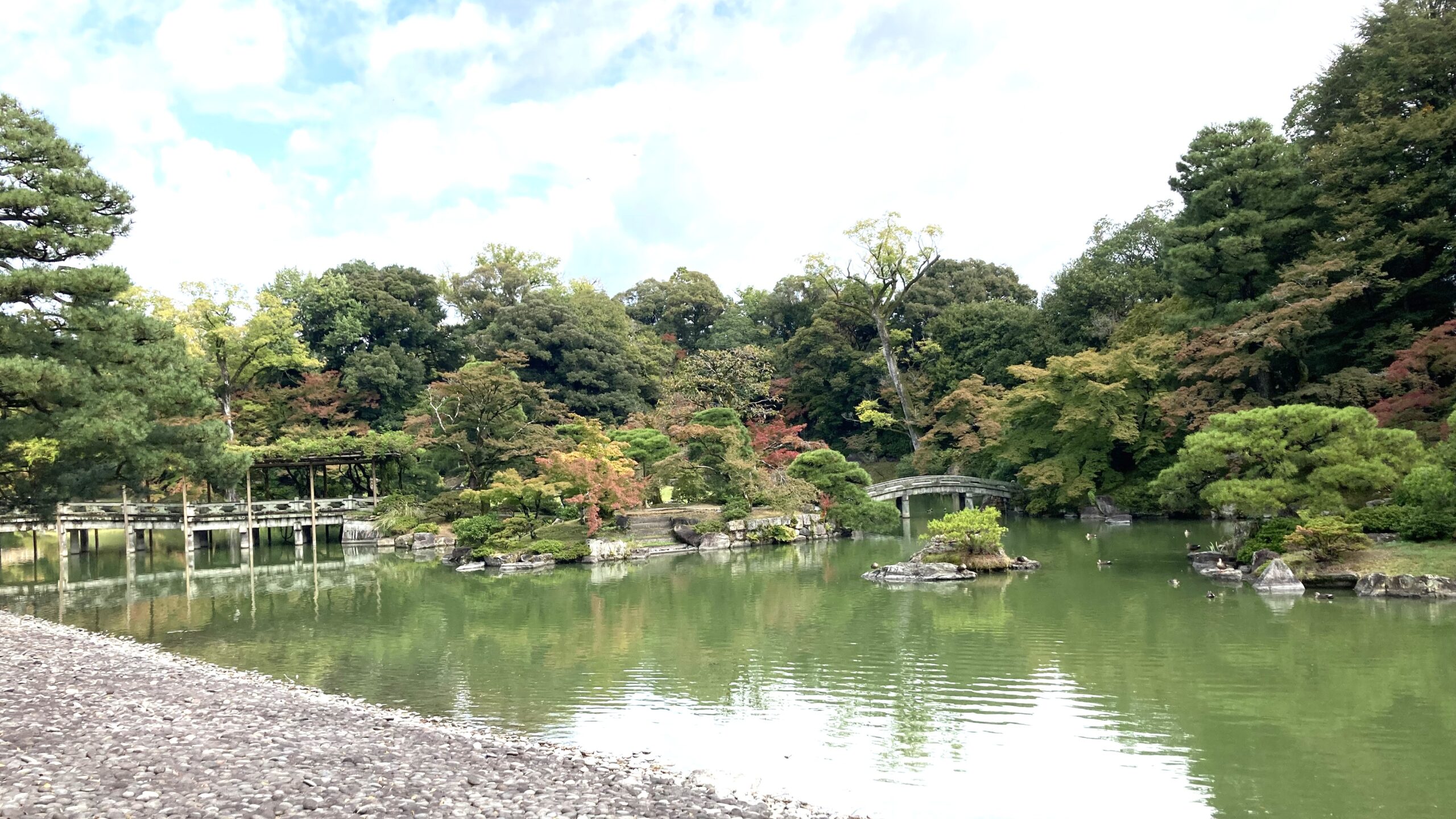
Beyond architecture and garden design, Masakazu also served as an administrator in Fushimi, Kyoto, overseeing practical governance in western Japan. Traveling constantly between Edo, Nagoya, Kyoto, and other regions, he managed political duties and architectural enterprises simultaneously—a remarkably capable multitasking official.
The Innovation Through Linear Beauty and Bold Pruning
A defining feature of Kobori Enshu’s gardens is his compositional skill: introducing decisive straight lines within predominantly curved landscapes, combined with bold sculptural pruning. Within settings traditionally shaped by natural forms alone, his integration of linear design and clipped shrubs created a dignified clarity. This reflects the disciplined precision of a magistrate as much as the sensitivity of an artist.
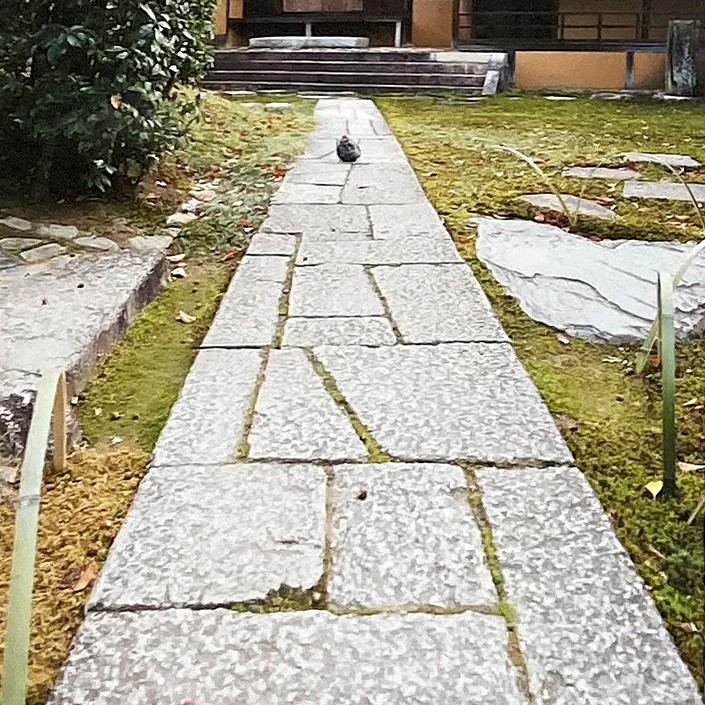
At Katsura Imperial Villa, the stone pavement known as the Shin no Nobedan, composed of carefully aligned straight-cut stones, symbolizes Enshu’s aesthetic vision. Beyond its visual refinement, it was designed with practical consideration, allowing imperial visitors to walk comfortably—a testament to Enshu’s attentiveness.
At Konchi-in Temple in Kyoto, the dry landscape garden known as the Crane and Tortoise Garden also exemplifies his linear aesthetic. At its center lies a six-meter rectangular worship stone set within a field of white gravel. The tension between gravel and carefully pruned azaleas creates a compelling, restrained beauty. Commissioned by the influential Zen monk Ishin Sūden—who assisted Ieyasu in matters of law, diplomacy, and religious administration—the garden embodies a disciplined serenity befitting the era it helped shape.
Raikyū-ji Garden in Okayama represents one of Enshu’s boldest expressions of sculpted pruning. Large azalea forms evoke rolling ocean waves, known as seigaiha. Their rhythmic motion adds vitality to the dry-land composition. At the center stand symbolic Crane and Tortoise Islands within a sea of white gravel, forming a refined Hōrai paradise garden. In spring, pink and crimson blossoms blend with fresh greenery; in autumn, the clarity of the sculpted forms becomes most striking.
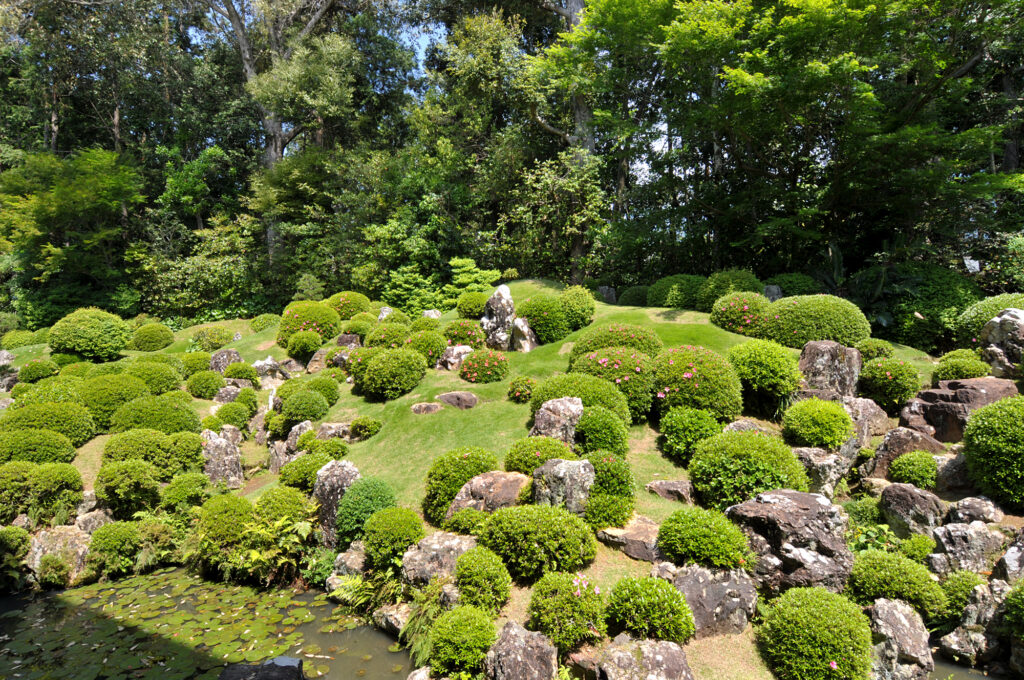
Ryōtan-ji Temple, the family temple of the Ii clan, features a pond-viewing garden traditionally attributed to Enshu. Ii Naomasa, one of four great generals of Tokugawa Ieyasu, emerged. Its grand composition expresses the Crane and Tortoise motif throughout the entire artificial hill. In autumn, the enkianthus blaze red; in spring, azaleas bloom magnificently. Each clipped form harmonizes within the whole, offering changing seasonal expressions.
Kobori Enshu’s life was, in essence, the very embodiment of kirei-sabi—a crystallization of the order and beauty of samurai society.
Kobori Enshu Timeline
| 1579 | Kobori Masakazu is born | Age=1 |
| 1591 | Rikyu Hara-Kiri | - |
| 1593 | Kobori Enshu learns Chonoyu from Oribe | 15 |
| 1595 | Kobori Mastsugu becomes a retainer of Toyotomi Hideyoshi | 17 |
| 1598 | Hideyoshi passes away | - |
| 1599 | Kobori Masakazu holds his first tea ceremony | 20 |
| 1600 | The Battle of Sakigahara | 21 |
| 1604 | Kobori Masakazu enters the service of Tokugawa Ieyasu. | 26 |
| 1606 | Kobori Masakazu oversees construction works at Edo Castle. | 28 |
| 1608 | Kobori Masakazu appointed Commissioner of Works for Sunpu Castle. | 30 |
| 1608 | Kobori Masakazu supports building Mittan tea room | 30 |
| 1612 | Kobori Masakazu appointed Commissioner of Works for the main keep of Nagoya Castle. | 34 |
| 1613 | Kobori Masakazu appointed Commissioner of Works for the Imperial Palace of Emperor Go-Mizunoo. | 35 |
| 1614 | Kobori Masakazu appointed Commissioner of Repairs for Bitchū Matsuyama Castle. | 36 |
| 1614 | Kobori Masakazu designs Raikyuji Temple Garden | 36 |
| 1616 | Tokugawa Ieyasu passes away. | ー |
| 1617 | Kobori Masakazu appointed Commissioner of Works for the Honmaru and shoin of Fushimi Castle. | 39 |
| 1618 | Kobori Masakazu appointed Commissioner of Works for the palace of Princess Kazuko (later Tōfukumon-in), consort of Emperor Go-Mizunoo. | 40 |
| 1618 | Kobori Masakazu designs Konchiin tea room | 40 |
| 1620 | Kobori Masakazu appointed Commissioner of Works for the main gates and related structures of Osaka Castle. | 42 |
| 1622 | Kobori Masakazu appointed Governor (Bugyō) of Ōmi Province. | 44 |
| 1623 | Kobori Masakazu appointed Fushimi Bugyō (Magistrate of Fushimi). | 45 |
| 1624 | Kobori Masakazu appointed Commissioner of Works for Nijō Castle and the Gyokō Palace (Imperial Visitation Palace). | 46 |
| 1626 | Emperor Go-Mizunoo visits Nijō Castle. | ー |
| 1626 | Kobori Masakazu appointed Commissioner of Works for the main keep and Honmaru of Osaka Castle. | 48 |
| 1628 | Kobori Masakazu appointed Commissioner of Works for the Ninomaru Palace of Nijō Castle. | 50 |
| 1628 | Kobori Masakazu holds more than 30 tea ceremonies, inviting 150 guests in total | 50 |
| 1629 | Completion of the Yamazato tea garden at the West Bailey of Edo Castle. | 51 |
| 1629 | Completion of Konvhiin's Hassō-seki (Eight-Window Tea Room) | 51 |
| 1630 | Completion of works as Commissioner for the Sentō Imperial Palace. | 52 |
| 1631 | Tea gathering held at the West Bailey of Edo Castle. | 53 |
| 1632 | Completion of the garden at Nanzen-ji Temple. | 54 |
| 1632 | Kobori Masakazu holds tea ceremony every day from Dec.11 to 25th. | 54 |
| 1633 | Kobori Masakazu appointed Commissioner of Works for the sukiya-style structures of the Honmaru at Nijō Castle. | 55 |
| 1640 | Construction of the shoin and Shōkin-tei at Katsura Imperial Villa. | 62 |
| 1640 | Kobori Masakazu holds more than 64 tea ceremonies, inviting 262 guests in total | 62 |
| 1642 | Kobori Masakazu holds more than 48 tea ceremonies, inviting 198 guests in total | 64 |
| 1643 | Zen Master Kogetsu Sōgan passes away; Kohō-an is relocated to its present site. | 65 |
| 1646 | Kobori Masakazu holds more than 35 tea ceremonies, inviting 158 guests in total | 68 |
| 1647 | After 25 years of service as Fushimi Bugyō, Kobori Masakazu passes away. | 69 |
Key Locations in Kobori Enshu’s Life and Creativities
Rikyuji Temple Garden
Access: A 15-minute walk from Bitchu-Takahashi Station on the JR Hakubi Line.
Ryotanji Temple Garden
Access: Take the JR Tokaido Line to Shin-Fujiwara Sta. Transfer to Tenryu Hamanako Railroad. Get off at Kiga Sta. 5 min. by taxi.