Emperor Tenmu and the Jinshin War: The Origins of the Shikinen Sengu at Ise Jingu
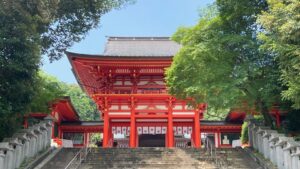
Emperor Tenmu (?-686, 天武天皇), the 40th emperor of Japan, ascended the throne after winning the Jinshin War, the largest civil conflict in ancient Japanese history. He established the Shikinen Sengu system, the ritual rebuilding of Ise Jingu (Ise Grand Shrine), a tradition that has endured for over 1,300 years. After his death, his consort, Empress Jitō, carried out the first Shikinen Sengu of Kotaijingu, known as Naiku (Inner Shrine) in 690, followed by that of Toyo’uke-no-Omikami, known as Geku (Outer Shrine) in 692.

The Shikinen Sengu
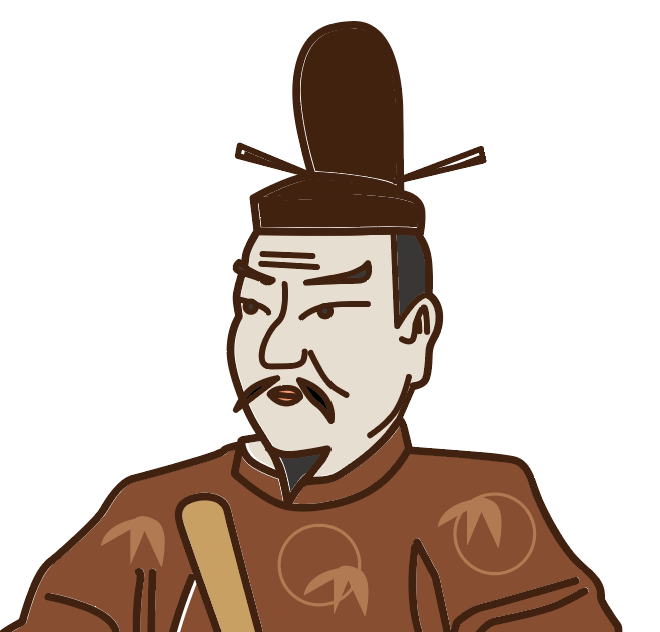
The Shikinen Sengu is held once every 20 years. On this occasion, the main sanctuaries and auxiliary buildings of both the Inner and Outer shrines are completely rebuilt. All sacred garments and ritual treasures - approximately 800 types, totaling about 1,600 items - dedicated to the deities are also newly made. These include offerings to Amaterasu Ōmikami of the Naiku, Toyo’uke-no-Omikami of Geku, and many other kami (deities). Each item is created using ancient techniques faithfully preserved, while reflecting the highest level of craftsmanship of its time by master swordsmiths, metalworkers, lacquer artisans, and textile artists.
This sacred tradition has been passed down through the ages. Preparations for the 63rd Shikinen Sengu are underway, with related festivals and rituals beginning in advance of its most important ceremony, the Sengyo-no-Gi (the ritual transfer of the deity), scheduled for the autumn of 2033. Emperor Tenmu established the Shikinen Sengu to achieve spiritual unity, bringing together the hearts and minds of the people under the authority of the sun goddess.
The Crushing Defeat at the Battle of Baekgang
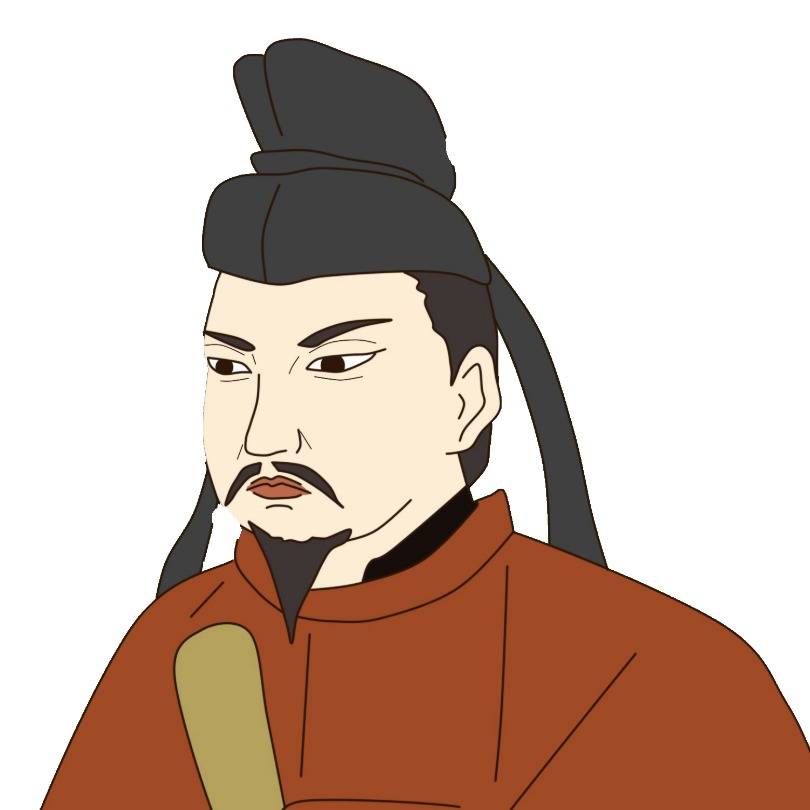
In 663, Prince Naka-no-Ōe (later the 38th Emperor Tenji), and elder brother of Prince Ōama (later Emperor Tenmu), led a military expedition to the Korean Peninsula to support the kingdom of Baekje, acting on behalf of his mother, Empress Saimei. The Yamato forces landed in the southern peninsula but suffered a devastating defeat at the hands of the allied Tang and Silla forces. Alarmed by the possibility of a Tang-Silla invasion of Japan, Prince Naka-no-Ōe turned his attention to national defense. He ordered the construction of defensive fortifications, including the mizuki earthworks, extending from Tsushima and northern Kyushu along the Seto Inland Sea. After ascending the throne as Emperor Tenji, he further strengthened security by relocating the capital from the vulnerable Naniwa Palace on Osaka Bay to the inland Ōtsu Palace in Ōmi Province.
However, the combined burdens of military defeat, large-scale defensive projects, and the relocation of the capital placed heavy demands on the realm, intensifying discontent among powerful regional clans.
The Death of Emperor Tenji and the Accession of Prince Ōtomo
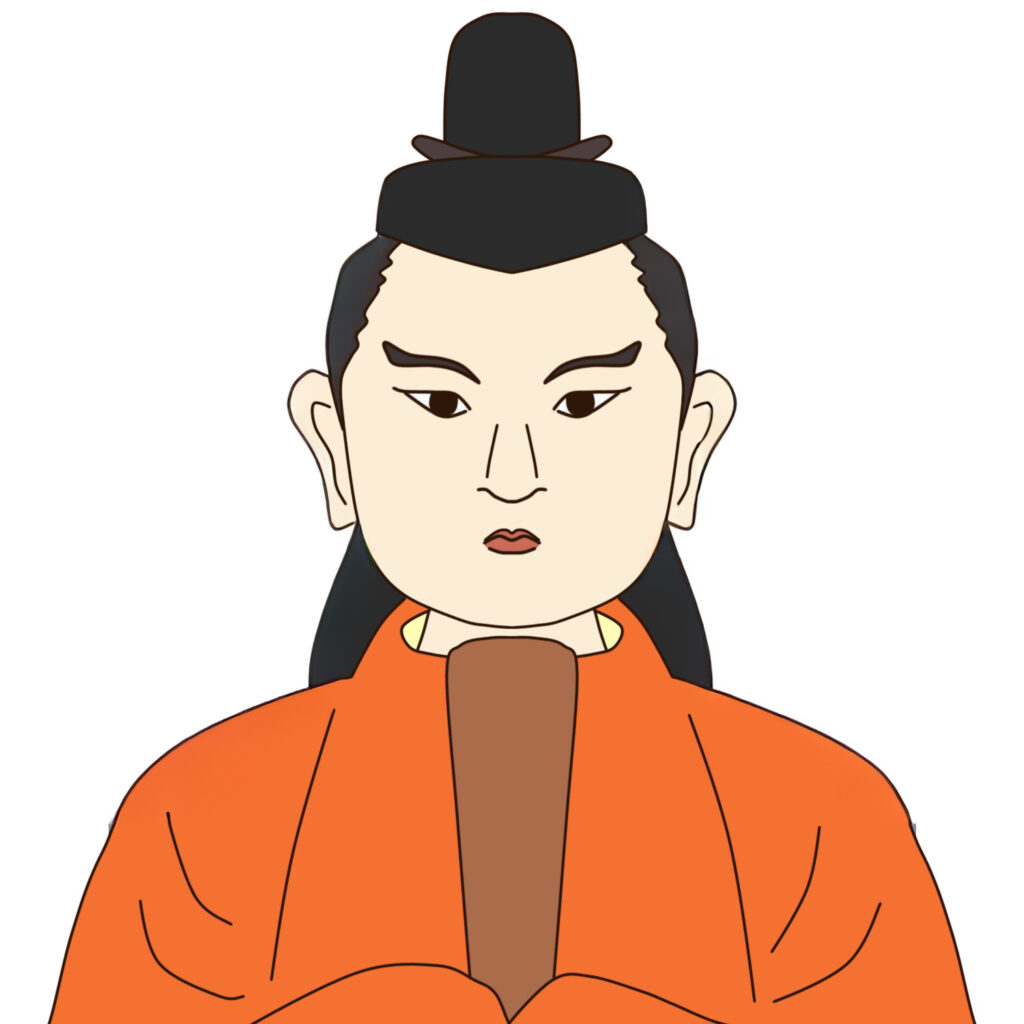
Amid growing unrest, Emperor Tenji at first considered passing the throne to his younger brother, Prince Ōama. However, he ultimately favored his own son, the capable Prince Ōtomo, as his successor, placing Prince Ōama in a precarious position. Sensing the threat to his life, Prince Ōama fled to the mountainous Yoshino in present-day Nara. When the time was ripe, he raised an army, and the Jinshin War began.
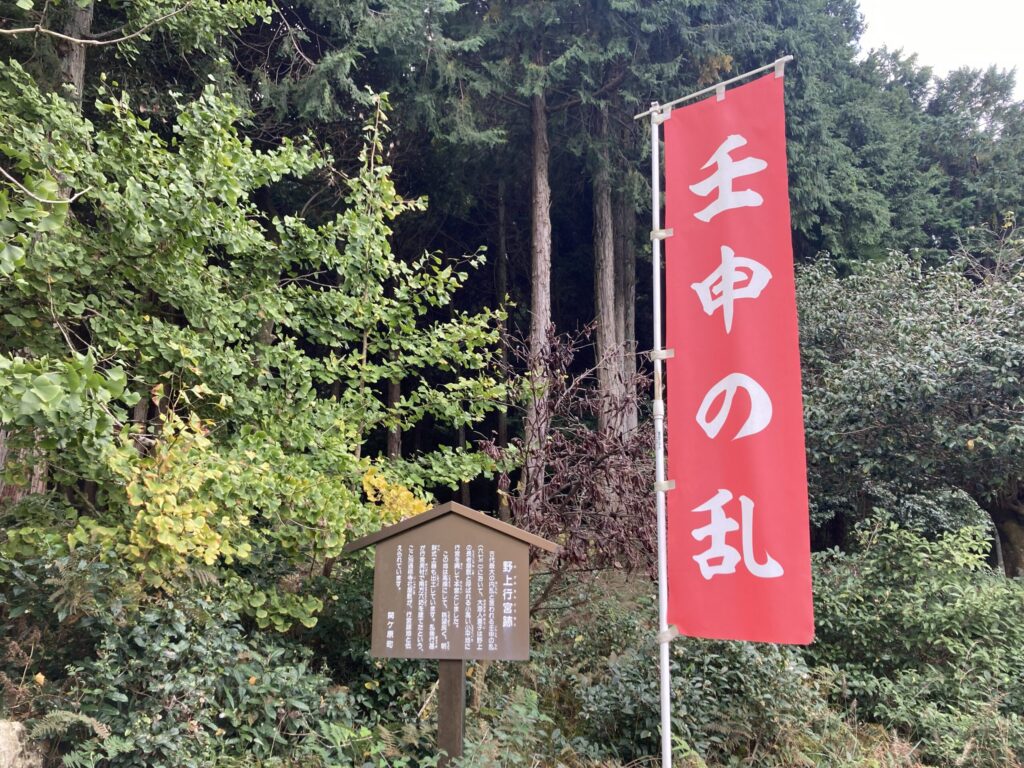
Prince Ōama quickly took control of the Fuwa Barrier (modern-day Sekigahara), a strategic gateway linking eastern and western Japan. By doing so, he cut off Prince Ōtomo’s ability to mobilize troops from the east. Supported by eastern clans already dissatisfied with the Tenji's government, Prince Ōama gained the advantage. He advanced northward along Lake Biwa and defeated Prince Ōtomo's forces in a series of battles. The final confrontation took place at the Karahashi Bridge over the Seta River near the Ōtsu Palace. Prince Ōama’s army attacked from the east while Prince Ōtomo's forces advanced from the west. Prince Ōama emerged victorious, the Ōtomo forces fled, and Prince Ōtomo took his own life.
Prince Ōama then returned to Asuka, neglecting the Ōtsu Palace, and established the Asuka Kiyomihara Palace as the new capital. He ascended the throne the following year, marking the beginning of the reign of Emperor Tenmu.

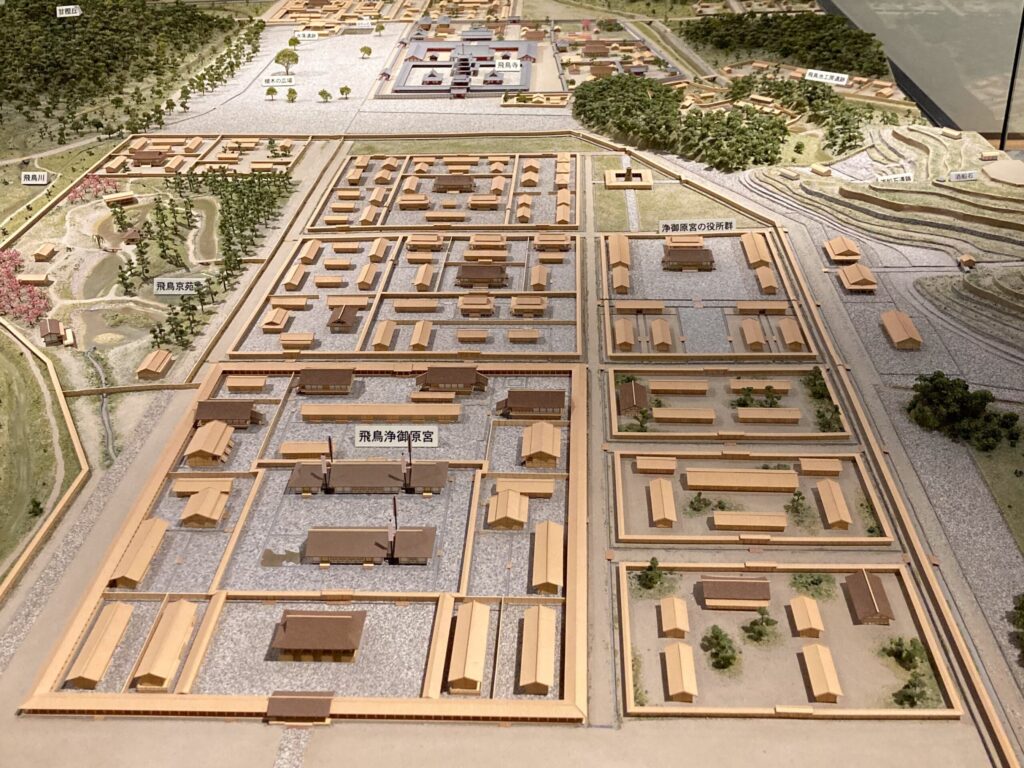
(@ Asuka Historical Museum)
The Reforms of Emperor Tenmu
Upon ascending the throne, Emperor Tenmu undertook two major initiatives:
(1) the establishment of a highly developed system of governance, and
(2) the spiritual unification of the powerful clans, including those who supported his regime.
In the early 7th century, Prince Umayado (Prince Shōtoku), who built Horyuji Temple, laid the ideological foundations of imperial rule through reforms such as the Twelve Cap and Rank System and the Seventeen-Article Constitution, which emphasized governance centered on the emperor. These ideas were later developed through policies such as the Public Land and People System. Building on this accumulated framework, Emperor Tenmu established the practical foundations of a centralized state by promulgating the Asuka Kiyomihara Code. This legislative system was based on Ritsu (penal codes) and Ryo (administrative laws), forming the essential framework of the Ritsuryo state
At the same time, Emperor Tenmu sought to unite the nation spiritually. From ancient times, clans throughout Japan had revered the sun as a divine power. Emperor Tenmu defined this sun deity as Amaterasu Ōmikami, the ancestral goddess of the imperial house, enshrined her at Ise Jingu, and established her worship as a state ritual. To ensure the lasting presence of this sacred power, he instituted the Shikinen Sengu, a national ceremony in which the shrine is ritually renewed every 20 years.
Through this system, Amaterasu Ōmikami, the emperor, and the state were bound together as one. By repeating the Shikinen Sengu every 20 years, Emperor Tenmu established a lasting framework for reaffirming the spiritual unity of the nation.
Emperor Tenmu Timeline
| 626 | Prince Nakano-Oe was born |
| 663 | The Battle of Baekgang |
| 668 | Emperor Tenji (Prince Nakano-Oe) ascended the throne |
| 672 | Jinshin War |
| 673 | Emperor Tenmu ascended the throne |
| 686 | Emperor Tenmu passed away |
| 690 | Empress Jito ascended the throne |
| 690 | The first Sikinen Sengu was held at Naiku of Ise Jingu |
| 692 | The first Sikinen Sengu was held at Geku of Ise Jingu |
| 701 | Taiho Code was completed |
Recommendations to Visit
Ise Jingu Shrine & Sengukan Museum at Geku
- Access from Nagoya: 1 hour and 20 minutes from Kintetsu Nagoya Station, then get off at "Iseshi Station (伊勢市)". A 5-minute walk to Geku. Take a 10-minute bus #51 or #55 to Naiku.
- Access from Kyoto: 2 hours and 10 minutes from Kintetsu Kyoto Station, then get off at "Iseshi Station (伊勢市)". A 5-minute walk to Geku. Take a 10-minute bus #51 or #55 to Naiku.