
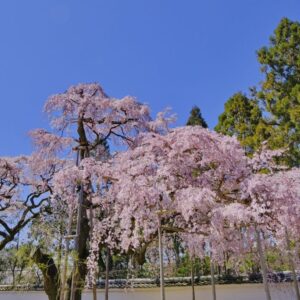
Daigoji Temple: Cherry Blossoms Festival Honoring Hideyoshi's Unification of Japan
Explore Daigo-ji Temple in Kyoto through the story of Toyotomi Hideyoshi’s legendary 1598 cherry blossom celebration. Discover its World Heritage buildings, historic gardens, and seasonal beauty.
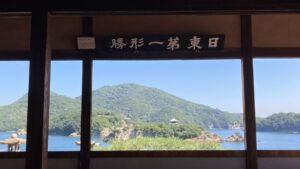
Taichoro, The Most Beautiful Guest Room Admired by the Korean Envoy
The view from Taichoro at Fukuzen-ji Temple, a reception hall and the guest lodge for the Korean Envoy, is a dignified beauty like a picturesque landscape framed by wooden columns. This scenic vista extends to the Sensuijima and Benten-jima islands in the east, while the Shikoku Mountains are in the distance, overlooking the Seto Inland […]

Honpoji Temple: Birthplace of the Rimpa School and Hon'ami Koetsu's World of Faith and Beauty
The tender green of the trees from outside is reflected on the polished stone floor at Honpoji Temple in Kyoto. The colors shimmer on the black surface and create a tranquil atmosphere. It’s incredibly beautiful. Honpoji Temple stands as one of the temples within the Nichiren Sect of Buddhism, established by Priest Nisshin during the […]
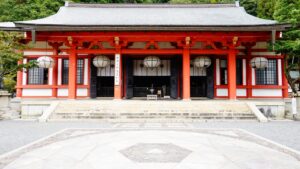
Kuramadera Temple's Power Contributed Minamoto no Yoshitsune to Winning the Genpei War
Kuramadera Temple, nestled deep in Mt. Kurama in the northern part of Kyoto, is renowned for its vortexes and the breathtaking natural beauty of trees that have grown over the years. Upon passing through the Niomon Gate, a meandering path guides visitors to the main hall. In the Heian period (794-1185), the esteemed female writer […]
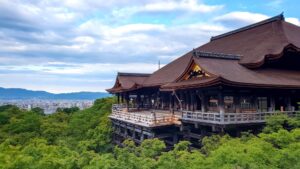
Kiyomizu-dera: Shogun Tamuramaro Conquers the North with Kannon's Blessings
Discover how Sakanoue no Tamuramaro conquered the north with the help of Kannon at Kiyomizu-dera. Explore his battles against the Emishi, his faith, and his legacy in Noh.
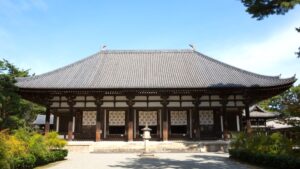
The Legacy of Toshodaiji Temple: Ganjin’s Epic Voyage to Japan
Tōshōdaiji Temple in Nara, founded by Ganjin in 759, reflects Emperor Shōmu’s effort to stabilize Japan through Buddhism amid epidemics and unrest.
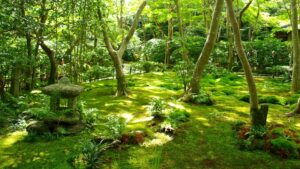
Saihoji (Moss Temple): The pinnacle temple created by Zen Priest and Garden Designer, Muso Soseki
The ultimate beauty of nature's formations Saiho-ji, a UNESCO World Heritage Site, known as the Moss Temple, is a Rinzai Zen Buddhist temple that held a special place in Steve Jobs’ heart, drawing him to visit it several times. This enchanting temple boasts a 5,000 square meter garden adorned with approximately 120 distinct varieties of […]

Hiraizumi: A Prosperous City of the Oshu Fujiwara Clan that Lasted 100 Years
The cedar-lined Tsukimizaka (Moon Viewing) slope of Chuson-ji Temple in a solemn mountain atmosphere brings you to the Konjikido Golden Hall, which retains its appearance of those days. Stepping into it, you may feel Fujiwara Kiyohira’s aspiration to build a Buddhist Land (an ideal peaceful nation on the Buddha’s teaching) from the entire structure. It […]
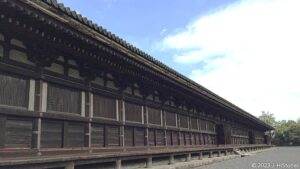
Sanjusangen-do Hall in Kyoto: Emperor Go-Shirakawa and the Buddhist Meaning of “33”
Sanjūsangen-dō Hall in Kyoto was built in 1164 by Emperor Go-Shirakawa and houses 1,001 statues of the Thousand-Armed Kannon. Learn the Buddhist meaning of “33.”
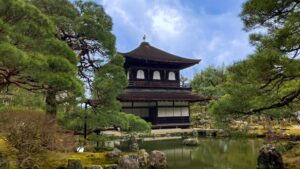
Ginkaku-ji (Silver Pavilion): The Moon-Viewing Temple That Shaped Wabi-Sabi
Ginkaku-ji Temple (Silver Pavilion), a UNESCO World Heritage Site and a National Treasure, stands quietly at the foot of Mt. Higashiyama, far from the bustling heart of Kyoto. Ashikaga Yoshimasa (1436-1490, 足利義政), the 8th shogun of the Muromachi shogunate (1336-1573), ordered its construction during the latter years of his reign. Within the tranquil confines of […]