Oda Nobunaga at Gifu Castle: The Rise of Tenka Fubu
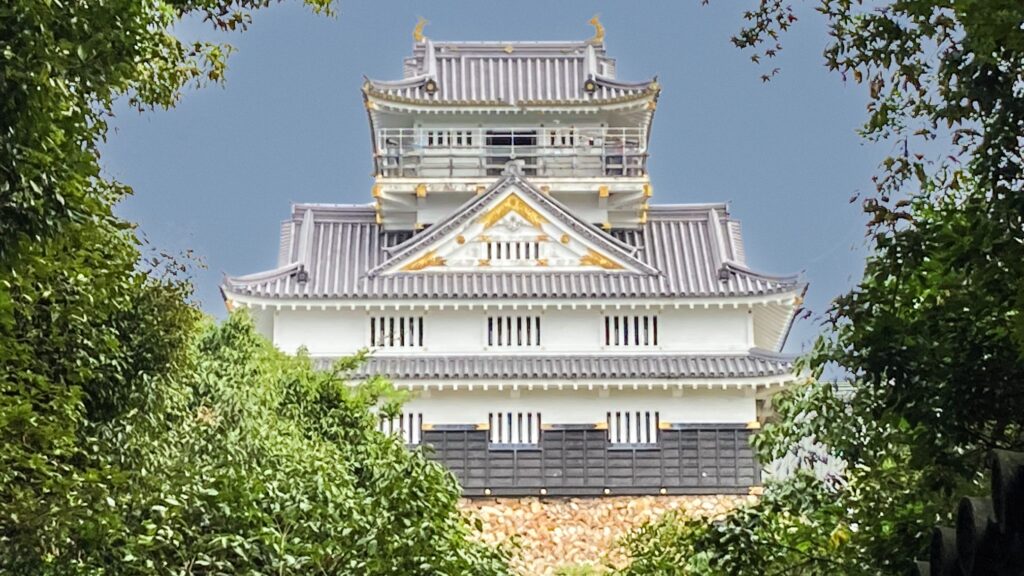
From the keep of Gifu Castle, perched high atop a rocky mountain, the Nagara River stretches far below, framed by the distant Japanese Alps and Mount Ontake. It was here that Oda Nobunaga transformed a strategic stronghold into a symbol of both power and refinement—and boldly proclaimed his vision of Tenka Fubu, to bring the realm under control through military strength.
In April 1552, at just 19 years old, Oda Nobunaga (1534–1582, 織田信長) succeeded his father, Oda Nobuhide (1510–1552, 織田信秀), as head of the Oda family. Nobuhide, a formidable warrior known as the Tiger of Owari, died at 42, leaving his young heir to navigate a turbulent and dangerous world. Surrounded by enemies on all sides, Nobunaga was thrust into conflict from the very beginning. Over the next 14 years, Nobunaga fought relentlessly to secure his power. In 1555, he unified the southern part of Owari Province. In 1558, he eliminated his younger brother, ending the succession dispute. In 1560, he achieved a stunning and improbable victory at the Battle of Okehazama, defeating Imagawa Yoshimoto and announcing his rise to the nation. By 1565, he had subdued Owari Province (present-day western Aichi Prefecture). Finally, in 1567, he seized control of Gifu Castle, where he would declare his bold ambition of Tenka Fubu.
The Young Nobunaga's Ordeal: Rebellion and Betrayal Within
Shortly after Nobunaga succeeded his father, Nobuhide, the first to rise in rebellion was Yamaguchi Noritsugu, one of Nobuhide's senior retainers. Noritsugu had been entrusted with the defense of Narumi Castle, strategically situated in the southeastern region of Owari, serving as a frontline stronghold against the Imagawa forces. However, Noritsugu defected, aligning himself with the Imagawa and turning his arms against Nobunaga. Nobunaga responded without delay, mobilizing his troops and marching to confront Noritsugu. The two forces clashed near Akatsuka (present-day Midori Ward in Nagoya City), where Noritsugu's forces were positioned. A fierce battle ensued, with volleys of arrows and the clash of spears, but the outcome remained undecided, and the fighting gradually subsided. This was Nobunaga's first battle after his succession to family headship.
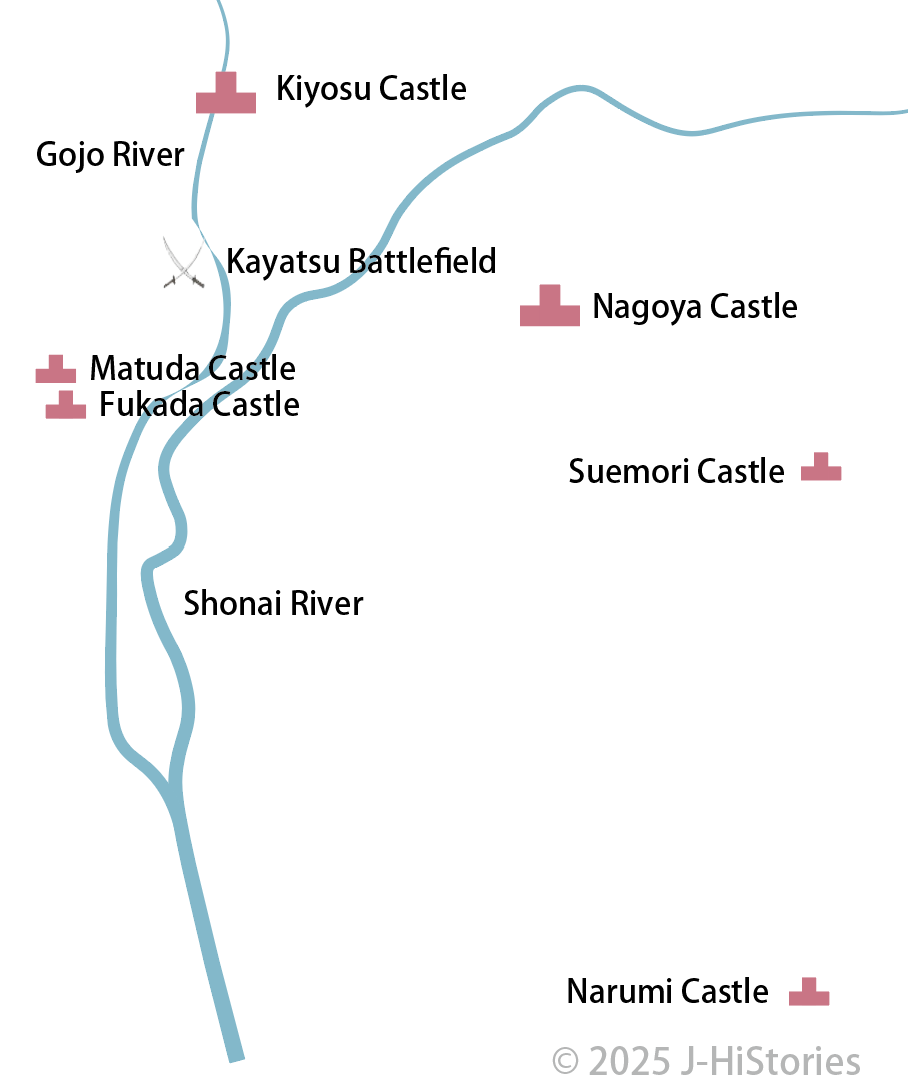
Just four months later, in August, another crisis broke out. Sakai Daizan and his son, senior retainers of Oda Nobutomo, the lord of Kiyosu Castle, took action. They launched a surprise attack on Matsuba Castle and Fukada Castle, both under Nobunaga's control. The assault succeeded: both castles were captured, and their lords were taken hostage. In response, Nobunaga divided his forces into three units and advanced toward Kiyosu, Matsuba, and Fukada Castles. The main force encountered Sakai Daizan's troops near Kayatsu (present-day, Ama City in Aichi Prefecture), where a fierce battle took place. Nobunaga emerged victorious and quickly retook both Matsuba and Fukada Castles. However, Sakai Daizen's ambitions did not end there. He conspired with his lord, Oda Nobutomo, and together they assassinated Shiba Yoshimune, the shugo daimyo of Owari. In response, Nobunaga, with a request for justice from Yoshimune's son, raised his forces once again. In 1555, he defeated Nobutomo. Sakai Daizen fled and sought asylum with the Imagawa clan. With this victory, Nobunaga finally secured control over the southern Owari, which had been under the influence of the Kiyosu Oda clan. He was just 22 years old at the time.
In 1559, Nobunaga defeated the Iwakuwa Oda clan (also known as the Oda Ise-no-kami family), who served as shugo-dai in the northern part of Owari. He expelled the castle lord and brought their territory under his control. However, Nobunaga's unification of Owari would not be complete until 1565, when he subjugated the Inuyama Oda clan.
The Purge of Nobunaga's Brother, Nobukatsu
Nobunaga took firm action to resolve internal strife within his family and succeeded in ending the power struggle inside the Oda Danjo-no-jo family. In 1556, his younger brother, Nobukatsu, rebelled. Known for his upright character, Nobukatsu gained the support of influential vassals, including senior retainers, as he began to plot to take Nobunaga's position as head of the family. Eventually, he took up arms against his brother. Nobunaga immediately responded. He confronted Nobukatsu's forces in battle. Outmatched by Nobunaga's troops, Nobukatsu fled to his residential Suemori Castle, where Nobunaga pursued and besieged the castle. However, after receiving a heartfelt request from their mother, Nobunaga decided to forgive Nobukatsu and also the senior retainers who had joined him. Even so, Nobukatsu did not abandon his opposition. In the end, Nobunaga decided to eliminate the threat. On November 2, 1558, he summoned Nobukatsu under the pretense of being ill and had him killed on the spot. At the time, the Oda family was surrounded by powerful enemies such as the Imagawa and Saito clans, who were looking for any opportunity to strike. In such a dangerous situation, Nobunaga chose to eliminate even his brother to remove any internal threats. He was 25 years old at the time.
The Battle of Okehazama: Nobunaga's Turning Point
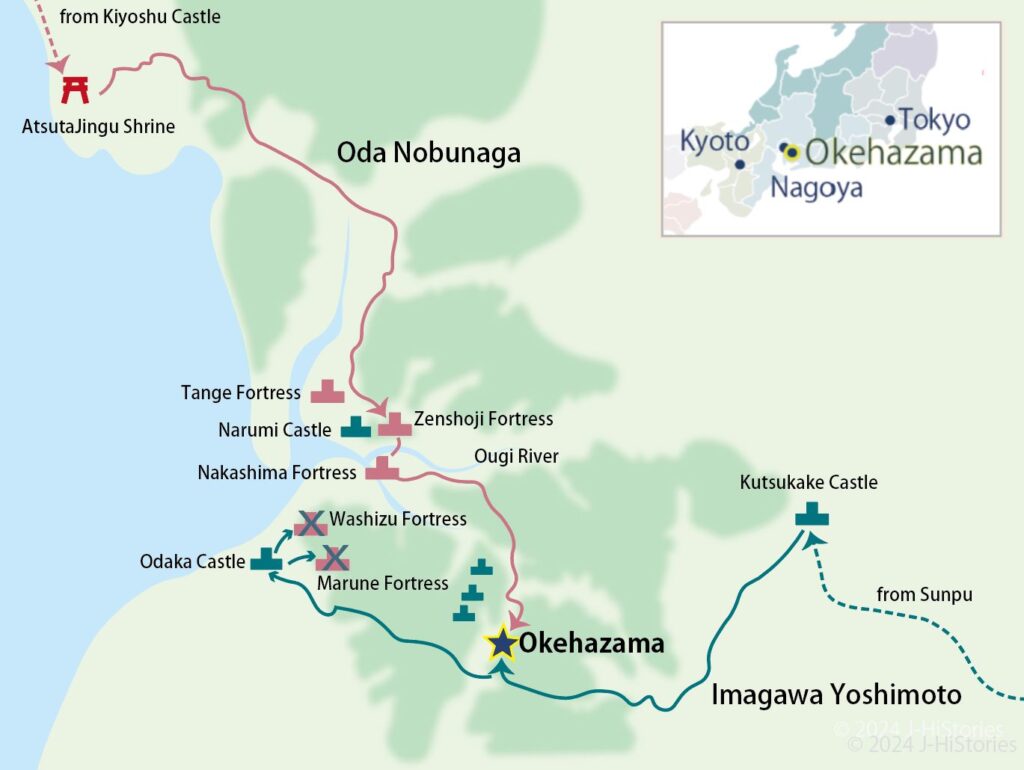
While Nobunaga was consolidating control over Owari, the powerful Imagawa army continued its advance. After the fall of Narumi Castle, nearby strongholds such as Odaka Castle and Kutsukake also came under Imagawa control. Additionally, the Imagawa forces built Muraki Fortress to cut off the communication between Nobunaga's forces stationed at Ogawa Castle and Chita Castle. Meanwhile, Imagawa Yoshimoto, the head of the Imagawa clan, secured key coastal areas along Ise Bay, threatening the vital ports of Tsushima and Atsuta that underpinned Nobunaga's economic power. This situation prompted Nobunaga to launch a counterattack. In 1554, Nobunaga captured Muraki Fortress and constructed a network of forts, including Tange, Nakajima, and Zenshoji around Narumi Castle, and Marune and Washizu Forts near Odaka Castle. These forts effectively cut off enemy supply lines. Pressure on the Imagawa forces steadily increased.
On June 12, 1560, Yoshimoto marched from Suruga with 25,000 troops to invade Owari. The following morning, after entering Kutsukake Castle, his forces attacked and captured Marune and Washizu Forts.
Upon hearing this, Nobunaga is said to have performed the Astumori dance, singing of life's brevity, before departing Kiyosu Castle with only six cavalrymen. After praying for victory at Atsuta Jingu Shrine, he advanced to Zenshoji Fort and, under cover of a thunderstorm, launched an attack on the Imagawa main camp at Okehazama. Yoshimoto was killed, and Nobunaga secured a decisive victory that made his name known nationwide.
Following this victory and decline of the Imagawa clan, Nobunaga reduced eastern threats by allying with Matsudaira Nobuyasu of Mikawa Province - later Tokugawa Ieyasu (1543-1616, 徳川家康). The Battle of Okehazama marked a decisive turning point for Nobunaga, who was 28 years old at the time.
Conquest of Mino: The Great Cause of Tenka Fubu
In 1561, one year after the Battle of Okehazama, Saito Yoshitatsu, the ruler of Mino Province (present-day Gifu Prefecture), died suddenly. His 14-year-old son, Tatsuoki, inherited leadership of the Saito clan. Seeing this as an opportunity, Nobunaga launched a campaign into Mino. He departed from Kiyosu Castle, crossed the Kiso River, and invaded Mino. The two armies clashed fiercely at Moribe (present-day Anpachi Town in Gifu Prefecture), but Nobunaga was unable to capture Mino. Its steep, well-fortified castle proved too difficult to take, forcing him to retreat
In 1563, Nobunaga relocated his base to Mount Komaki and shifted his strategy. Rather than directly attacking the Saito stronghold, he targeted smaller outlying castles loyal to the Saito clan.
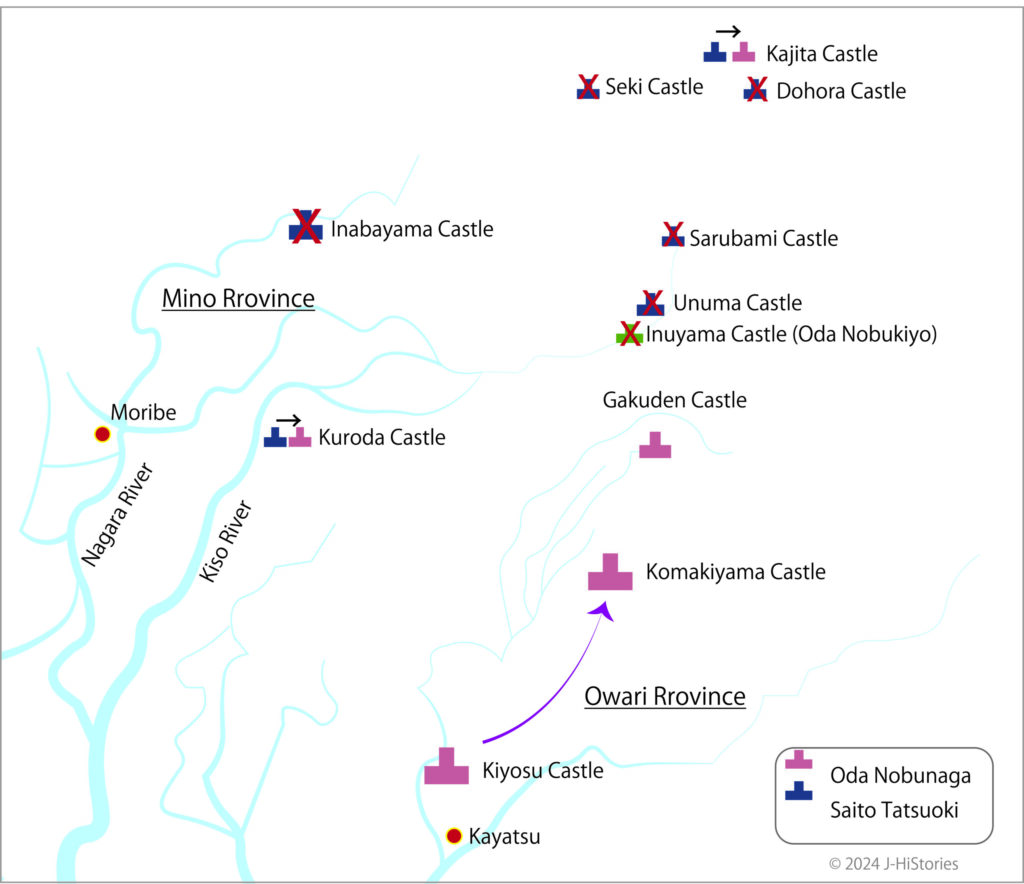
Around the same time, unrest arose within Owari as Oda Nobukiyo, lord of Inuyama Castle, rebelled. However, Kuroda Castle - held by his vassals near Komaki - surrendered to Nobunaga, and Inuyama Castle soon followed.
With this, by 1565, Nobunaga had finally secured complete control over Owari. That same year, Nobunaga formed an alliance with Takeda Shingen (1521-1573, 武田信玄) of Kai Province (present-day Yamanashi Prefecture), which bordered Owari, and, having established a solid foundation, pressed forward with his conquest of Mino.
The lord of Kajita Castle, who had been allied with the Saito clan, also switched sides and pledged loyalty to Nobunaga. Seizing the momentum, Nobunaga captured both Unuma Castle and Sarubami Castle, and then launched a major assault on the strategically important Dohora Castle. Under strong winds, Nobunaga ordered his soldiers to throw torches into the castle, setting fire to its second bailey. After the flames died down, he ordered the final assault. The battlefield became a chaotic melee where friend and foe were indistinguishable. Even so, Nobunaga's forces killed many enemy generals and captured Dohora Castle. Following this victory, three senior retainers of the Saito clan defected to Nobunaga. In 1567, Nobunaga finally succeeded in capturing Inabayama Castle, driving out its young lord, Saito Tatsuoki. With this, the seven-year campaign to conquer Mino came to an end. Among the warlords of the Sengoku period, Nobunaga stood out as a singular figure. He skillfully relocated his base of power following strategic needs, moving from Nagoya Castle to Kiyosu Castle, then to Komakiyama Castle, Gifu Castle, and later Azuchi Castle. This adaptive approach was one of the strategies he had learned from his father, Oda Nobuhide. Upon seizing Inabayama Castle, Nobunaga renamed the castle Gifu Castle and made it his base. From there, he began working to restore order throughout the Gokinai (five Provinces, including Kyoto and its surroundings) under the authority of the Ashikaga shogunate. He also began proclaiming the great cause of Tenka Fubu, meaning bringing peace to the realm through military power. He was 34 years old.
The Grand Renovation of Gifu Castle
As soon as Nobunaga took control of Gifu Castle, he began a large-scale renovation of the castle. On the first floor, he built an elegant sitting room and a beautiful garden. On the third floor, he added a tea room. From the observation deck, visitors could look out over the entire castle town of Gifu, creating an impressive space for entertaining guests. One of the highlights was the guest house, which featured a grand garden carefully designed to incorporate the natural rock face of the mountain. This space reportedly left visitors in awe. Nobunaga welcomed cultural figures, nobles, and foreign missionaries to Gifu Castle, personally hosting them with warm hospitality. In 1568, he entertained Takeda Shingen's retainer with a sumptuous meal and showed a cormorant fishing event on the Nagara River. The next year, in 1569, he received Luís Fróis, a Jesuit missionary who had been granted permission to preach in Japan. Fróis described the buildings at the foot of the castle as a "palace" and expressed that the castle town seemed “like a paradise on earth.”
Around the same time, Yamashina Tokitsugu, a court noble and cultural figure who had previously visited Nobunaga's father, Nobuhide, stayed at Gifu Castle for about a month after being entertained by Nobunaga. The following year, he invited a renowned tea master, Tsuda Sokyu, from Sakai City, to hold a special tea ceremony. He served an elaborate meal that included dried persimmons, a local specialty from Mino. At that time, Nobunaga is said to have placed a branch of willow in his famous flower vase and placed it on the tray given to him by Sokyu. Nobunaga's hospitality extended far beyond luxurious cuisine and traditional Noh performances. He also prepared gifts for his guests. He did not rely solely on military power, but he also used cultural power to attract people, capture their hearts, deepen relationships, and expand his network of influence. This approach reflected Nobunaga's broader vision for realizing Tenka Fubu. Perhaps deep down, Nobunaga saw a reflection of his father, Nobuhide, in himself. Though known for his military strength, Nobuhide had also sought the counsel of court nobles and scholars from Kyoto. He had a tradition in high regard and had refined his skills in courtly arts such as Kemari (classical Japanese football), waka poetry, and etiquette.
Timeline of Oda Nobunaga’s Life and Major Events
| 1534 | Nobunaga is born in Owari Province | 1 |
| 1546 | Comes of age at Furuwatari Castle | 13 |
| 1552 | Inherits family leadership after father Nobuhide dies | 19 |
| 1552 | Wins the Battle of Akatsuka against Yamaguchi Noritsugu | 19 |
| 1552 | Wins the Battle of Kayatsu against Sakai Daizen | 19 |
| 1554 | Defeats Imagawa's Muraki Fort | 21 |
| 1555 | Takes control of Kiyosu branch of Oda clan | 22 |
| 1558 | Purges his brother Nobukatsu | 25 |
| 1558 | Defeats the Iwakura branch of the Oda clan | 25 |
| 1560 | Defeats Imagawa Yoshimoto at the Battle of Okehazama | 27 |
| 1561 | Wins the Battle of Moribe against Saito clan | 28 |
| 1561 | Attempts to capture Inabayama Castle from the Saito clan, but fails | 28 |
| 1563 | Moves to Komakiyama Castle | 30 |
| 1564 | Defeats the Iwakura branch of the Oda clan | 31 |
| 1565 | Captures Sarubami Castle from the Saito clan | 32 |
| 1565 | Defeats Dohora Castle from the Saito clan | 32 |
| 1567 | Captures Saito's residence, Inabayama Castle | 34 |
| 1567 | Moves to Inabayama Castle and renames it to Gifu Castle | 34 |
| 1567 | Proclaims the great cause of Tenka Fubu | 34 |
Recommendations to visit
Gifu Castle
- Access: 20 minutes from JR Nagoya Station to JR Gifu Station on the Tokaido Main Line. Take a bus to the Gifukoen-mae stop. Take the Mount Kinka Ropeway.
Komakiyama Castle
- Access: 40-50 minutes from Nagoya Station to Komaki Station on the subway and Meitetsu Komaki Line. About 15 minutes to Komaki City Hall-mae bus stop.